What a Women's Empowerment Platform Taught Me About Boundaries
There is a particular irony in running a platform built on the idea that women should take up more space. For years I have encouraged women to step forward, to claim the room, to say yes to the life they actually want. Running This Girl Is On Fire taught me something different: visibility without limits is just another form of self-abandonment. The platform grew because women trusted me with their hardest stories, and for a long time I said yes to nearly all of them.
The lessons were not theoretical. They came from the diaries, the inbox, the WhatsApp groups and the women who trusted me with the parts of their lives they had never told anyone else. Running a women's empowerment platform has taught me that boundaries are not a retreat from the work, they are the condition that makes the work possible. Here is how that shift happened, from a place of over-commitment to something far more sustainable.
| How I used to operate | How I operate now |
|---|---|
| Saying yes to every request because being needed feels good | Saying yes only when the request fits the work I have already committed to |
| Filling every gap in the diary | Leaving gaps on purpose so the work I love stays sharp |
| Treating rest as a reward for finishing the job | Treating rest as part of the job itself |
| Absorbing other people's urgency as if it were mine | Letting someone else's deadline stay with them |
| Measuring success by how much I could carry | Measuring success by what I can sustain for years |
The platform grew faster than I planned
This Girl Is On Fire began as a live event and a conversation between women who wanted to talk honestly about their lives, their careers and their bodies, without having to perform confidence first. It was never supposed to become a full-time operation. Then it grew. Panels appeared, a podcast, a newsletter, speaking invitations, brand partnerships and a constant stream of requests from members who wanted to be heard.
One of the collaborations I value most is with the Kiflimally platform, where women talk openly about hormones, bodies and mental health without shame or filtering. The reason the partnership worked so naturally is that both spaces value honesty over polish. Women arrive tired, uncertain and often convinced they are the only one struggling. Give them a room with real candour in it and they will tell you things they have never said out loud.
The problem was that I inherited every request personally. A member needed a reply, a speaker needed a stage, a journalist needed a comment, a brand needed a spokesperson. Each one felt small on its own, and the accumulation was invisible. I had turned myself into the customer service desk for my own community, and no amount of success made that job feel less endless.
Saying yes without asking what it costs
For most of my career I have measured worth in usefulness. If I could help, I should help. If someone was struggling and I had a platform, a microphone or a platform name that could reach them, then withholding that was somehow a form of selfishness. I rarely stopped to price a request in sleep, in attention, or in the quiet hour I needed to think properly about the next thing.
The cost never appears on the invoice. It shows up as short temper, as preparation that gets rushed, as conversations that stop being interesting because I am already thinking about the four other things I have agreed to do that week. It shows up in the days when I am technically present and mentally somewhere else, which is exactly the state I used to congratulate myself on achieving.
What changed my mind was noticing how often a yes quietly became a permanent contract. Someone asked me to speak at an event in Leeds, and I said yes. Then they asked me to film a piece of content for it, and I said yes. Then a separate organiser heard how well that had gone and asked me to host, and I said yes again. Three strangers had built a week around me without ever speaking to each other, and I had handed them all the pieces.
Learning to say no without apologising
The first version of my boundary was terrible. I would say no, then explain at length why I was saying no, then offer a reason that was so generous the other person felt they had received a gift rather than a refusal. I was apologising for having limits, which is a strange thing to apologise for, especially when the limit was about my own capacity.
The version that works now has three parts. A clear no, a real reason, and an alternative where one exists. "I cannot take that on this month, my autumn is already committed, but I can send you the contacts of two people who do this brilliantly." That sentence is short, warm and complete. It leaves no room for the conversation to drift back towards persuading me.
The harder part is tolerating the brief disappointment that follows. Some people are mildly annoyed, and I used to treat that annoyance as evidence that I had done something wrong. In fact, a boundary creates a small, useful friction. It tells the other person that access to me is not automatic, that my attention is finite and that they need to think about what they are asking for. Those are not hostile messages.
Boundaries as a broadcast skill
People assume boundaries are a private or administrative concern, something that belongs in diaries rather than on camera. Live television taught me otherwise. In a panel discussion, an endless supply of agreement is not warmth, it is noise. When you say "yes, absolutely" to whatever the last person said, you add nothing. A person with a clear point of view holds the conversation together, and holding the conversation together is a technical skill.
That technical skill translates directly to the platform. When I moderate a room of women talking about money, confidence or the menopause, my job is not to have the most interesting answer. It is to keep the conversation honest, to protect the person who is struggling to speak and to decide what the room is not going to turn into. Every event I host follows the same principle: the structure exists so the people inside it can be brave.
There is a professional boundary there too. I am a broadcaster and a journalist, not a therapist, and I have never treated my audience as patients. When a producer wants to turn a private experience into a headline, I ask what the person actually consented to. When a brand wants a spokesperson who will say anything for a fee, I would rather lose the brief than become a person who gives away her credibility in bulk.
Menopause and the limits I kept ignoring
The platform made the requests visible. It made my own body less so. Somewhere in my late forties I stopped distinguishing between being tired and being depleted, and I kept pushing through a perimenopause that was asking for something much simpler than heroic effort. I was treating symptoms as a communications problem rather than a health one.
I have written about my own strength in the middle of that experience, and the boundary lesson sits right inside it. The strength was not in tolerating everything. It was in recognising which demands were never mine to meet, and having the language to decline them without making it a moral failing.
The practical changes were unremarkable and effective. Earlier nights without guilt. Work protected from the edges of the day. A rule that lunch is not a slot for other people's problems. Saying no to the meeting that could have been an email. None of it looked like ambition, and none of it felt like ambition, but I had more left for the work that mattered.
Managing anxiety on a busy broadcast day
Even with those boundaries in place, a live broadcast pulls the boundaries tight. The adrenaline arrives, the room gets loud, and every small uncertainty feels enormous. What I have learned is that anxiety is often a signal about too much input, not a failure of nerve, so I treat it as a scheduling problem as much as an emotional one.
I have shared three tools for anxiety that I use before going live, and they all involve preparation, breathing and deciding in advance what is and is not worth my attention that morning. The third one is the boundary: I decide what I am willing to carry into the studio. Everything else waits outside the door.
That has become a habit rather than a technique. I decide the shape of a day the night before, and I stop taking on new inputs during it. The result is calmer broadcast days, sharper conversations and a woman who sounds like she is enjoying herself, because for once she is not running on fumes.
What boundaries make possible
Running a women's empowerment platform has taught me that a boundary is not a wall. It is a clear edge that tells people where they can reach, what they can expect and what I will not hold for them. Women need to see that in other women, because most of us grew up being told that a woman who says no is difficult, unhelpful or ungrateful.
The best examples I have are the women who run their own businesses, teams and communities without apologising for the shape of their lives. They answer emails on Tuesday and they are fully unavailable on Sunday. They deliver the keynote and they do not also do three unpaid panels. They are warm, generous and completely clear about capacity, and that clarity makes them more generous, not less.
That is the version of empowerment I want this platform to model. A room where everyone is competing to hold more is a room where everyone ends up exhausted. A room where people know their limits is a room where they can actually give. The work gets braver when the load is shared properly, and the women in my audience deserve a platform that practices what it preaches.
Boundaries did not shrink This Girl Is On Fire. They gave it a shape, and they gave me a life that can sustain it for years rather than months.
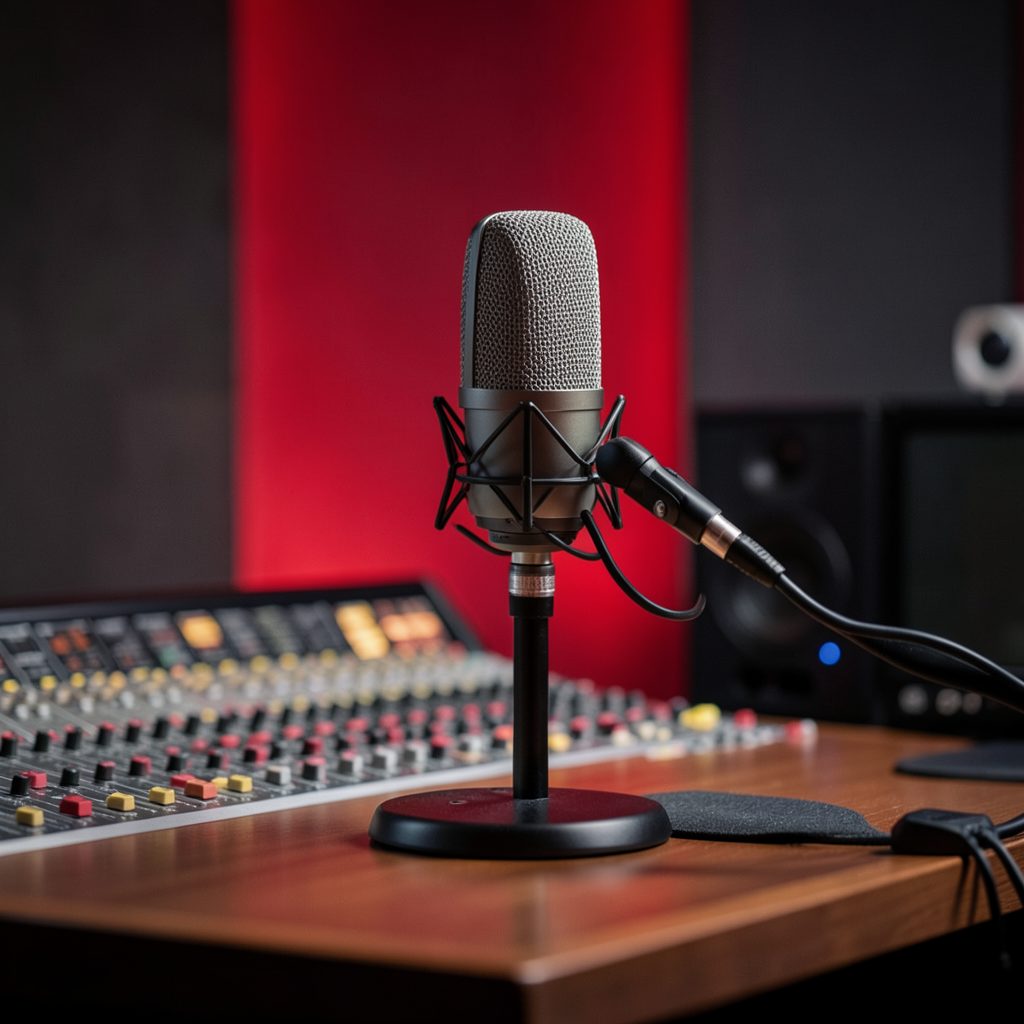
On Air & In Print
Andrea anchors the ITV lunchtime talk show Loose Women, which she joined in 2007, following 11 years as a core presenter on ITV's breakfast programme GMTV, a role she left on New Year's Eve 2008.
Alongside broadcasting, she has written for Red, Best, Scottish Woman and numerous weekly women's titles since starting as a freelance travel writer in 1993.
See Press & MediaReach & Recognition
A snapshot of the audience and impact behind Andrea's television, publishing and brand work.
This Girl Is On Fire
Andrea is CEO and Co-founder of the female empowerment platform This Girl Is On Fire, built around a mission to help women live, learn and thrive in a life they love.
Explore the PlatformScreen & Studio
Promotional and broadcast work created for television and corporate partners, including Barclaycard, Vistaprint and Wii Fit U.
Explore the Site
Find out more about Andrea's career, writing, media coverage and audience reach.
Get In Touch
For media, corporate or general enquiries, use the form below or reach out directly.
Contact details published on this site have appeared as +44 (0)20 7371 5444 / angharad.marsh@officialandreamclean.com and, on an earlier page, 020 7482 3282 / admin@officialandreamclean.com — please treat both as points of contact.