Championing Women's Health Without Giving Too Much Away
Women have always carried an unequal burden when it comes to speaking publicly about the body. For decades, the script said stay quiet about periods, hide the menopause, certainly do not mention postpartum depression, and absolutely keep any fertility struggle behind closed doors. Australia is rewriting that script faster than many places, yet the appetite for raw, unfiltered testimony has created its own problem. Advocates are being asked to give more of themselves than the cause actually requires.
In boardrooms in Sydney, on morning television across Brisbane, and at weekend wellness markets in regional Victoria, the same expectation keeps surfacing. Share the diagnosis, share the medication, share the heartbreak. The instinct to be helpful wars with the instinct to stay whole. That tension is real, and pretending it is not can leave even seasoned advocates exposed.
Most women who have built platforms around health learned the hard way that a personal revelation is permanent. Search engines remember it. Future employers glimpse it. Children eventually read it. Yet the public keeps asking for more vulnerability, often mistaking disclosure for credibility. Both can be true at the same time, and the trick is learning to offer one without surrendering the other.
What follows are six frameworks for keeping women's health advocacy honest, useful, and yours. They come from years of broadcasting, from observing colleagues, and from watching which voices built lasting movements and which ones burned out chasing engagement.
Why Boundaries in Health Advocacy Matter Now
Australia's National Women's Health Strategy 2020 to 2030 laid out the priorities clearly. Endometriosis, menopause care, mental health, and chronic pain all sit on the agenda. The strategy also noted something quieter, that too few women felt able to seek help because stigma still clings to half of these conditions. Data from the Australian Bureau of Statistics shows roughly one in seven women report high or very high psychological distress, and Jean Hailes Foundation surveys consistently find women want clearer information far more than they want celebrity confession.
That gap between what the audience actually needs and what some advocates feel pressured to deliver is where boundaries earn their keep. A story about your own misdiagnosis can move a room. It can also derail a campaign, hand ammunition to critics, and quietly exhaust the storyteller. Knowing which version of yourself belongs in public is a discipline, not a personality flaw.
The same year the National Women's Health Strategy launched, the Royal Australian College of General Practitioners updated its position statement on shared decision making. Doctors were reminded that patient stories must always be told with consent and context. The principle travels further than the clinic. Any advocate who borrows lived experience, their own or someone else's, owes the audience the same care.
Mapping What Belongs to You and What Belongs to the Cause
Before pressing record or drafting a caption, it helps to separate two piles. One pile is yours alone. The other pile belongs to the women you are trying to reach. Pitching them together usually means oversharing, because your story is always more dramatic than the issue it illustrates. Keeping them apart is where good advocacy begins.
| Your story | The cause |
|---|---|
| Specific diagnoses and dates | Prevalence statistics from credible sources |
| Names of clinicians or hospitals | Treatment pathways and referral routes |
| Private conversations with family | Quoted, attributed observations from peers |
| Personal grief, betrayal, or trauma details | Themes people recognise without you naming them |
This simple grid works because most of what makes a health message land is universal. The fatigue, the confusion, the delay in being believed, those are shared. The biopsy result, the medication dose, the therapist's first name, those are yours. The moment a piece of information only matters to you, it probably does not belong in the campaign.
Australia's Pharmaceutical Benefits Scheme listings make a useful parallel. The PBS publishes what is subsidised, the clinical criteria for access, and the evidence behind each decision. It does not publish who takes the medication. Public health communication works the same way. The mechanism matters, the personal file does not.
Building Messages Around Issues, Not Biographies
Once the piles are sorted, the next move is to find a message that does not require your body as evidence. The cleanest advocacy positions a fact in front of a feeling. Jean Hailes has spent years doing exactly this through its annual Women's Health Week campaigns. The statistics are striking, one in nine Australian women will develop breast cancer in their lifetime for example, and the call to action is practical. Nobody on those campaigns is asked to become the story.
Borrowing other women's experiences, with their explicit consent and their own words, can carry a message further than your own. A chorus feels different from a solo. The same principle drives the work explored in stories that resonate; connecting an audience is rarely about giving them everything you have, it is about giving them the right moment.
Issue-led messaging also travels across formats. A radio interview can lean on statistics. A podcast can include a peer with lived experience. A press release can lead with policy. None of these mediums force you to occupy the foreground. In Australia, where public broadcasters like the ABC and SBS give women's health serious airtime, advocates have a rare chance to inform without performing intimacy.
When You Do Speak Personally, Do It on Your Terms
Sometimes there is no substitute for the first-person voice. Particular conditions, early menopause after cancer treatment, hyperemesis gravidarum, severe perinatal anxiety, are still poorly understood, and a clear-eyed account can save someone else years of doubt. The question is never whether to share. The question is how.
Frame the story in the third person at first. Write it down. Read it back. Notice the bits that feel electric and the bits that feel extractive. The electric bits usually point to the cause. The extractive bits usually point to you. Keep the first, lose the second, then return to the first person only when you have edited for purpose.
Pre-record long formats. Live formats can be edited into clips later. A scheduled appearance on Sunrise or The Project, for example, can be planned so you only answer the questions you have already answered in private. Preparation protects the parts of you that are not for broadcast. This is the media appearance prep that founders and executives are quietly taught, and the same principles apply to anyone whose health has become part of their professional identity.
Set an expiry date on the story in your head. You can always say more later. You can rarely say less.
Turning Quiet Advocacy into Visible Change
Personal disclosures generate attention, but attention is not the same as action. If a campaign survives only while you keep telling the story, the campaign is fragile. If it survives without you, you have built something robust.
Practical outputs do the heaviest lifting. Lobbying a federal member about endometriosis funding, writing a submission to the Department of Health and Aged Care, partnering with a charity like the Breast Cancer Network Australia, or hosting a fundraiser for Beyond Blue, these are the slow, durable engines of change. Each can be pitched, packaged, and selling an idea through narrative rather than memoir.
Consider building a small advisory panel. Two or three women with lived experience of the condition you champion, willing to review your messaging before publication, can quietly save you from your own enthusiasm. They will also tell you when your platform has earned the right to ask more personal questions of others, and when it has not.
Preparing for Media Without Losing Yourself
The final discipline is logistical. Most oversharing does not happen because an advocate wanted to share too much. It happens because a journalist asked a sharper question than expected, or because a host steered a friendly interview toward a sensitive edge. Preparation short-circuits this. Know your three core messages. Know the one story you will tell on camera and the three you will not. Know which words you will not say on air even if prompted.
In Australia, the conversation about women's health has matured quickly in the past five years. Menopause has moved from whispered joke to legitimate workplace issue. Endometriosis is now written into national employment standards discussions. Mental health disclosures from elite athletes have shifted what is considered acceptable. None of this happened because individual women kept saying more. It happened because systems caught up with what women had already been saying for decades.
The next chapter belongs to advocates who can hold a microphone and keep their own privacy intact. Tell the truth about the issue. Guard the truth about yourself. Both can exist, and a movement that respects the difference will outlast any single voice in it.
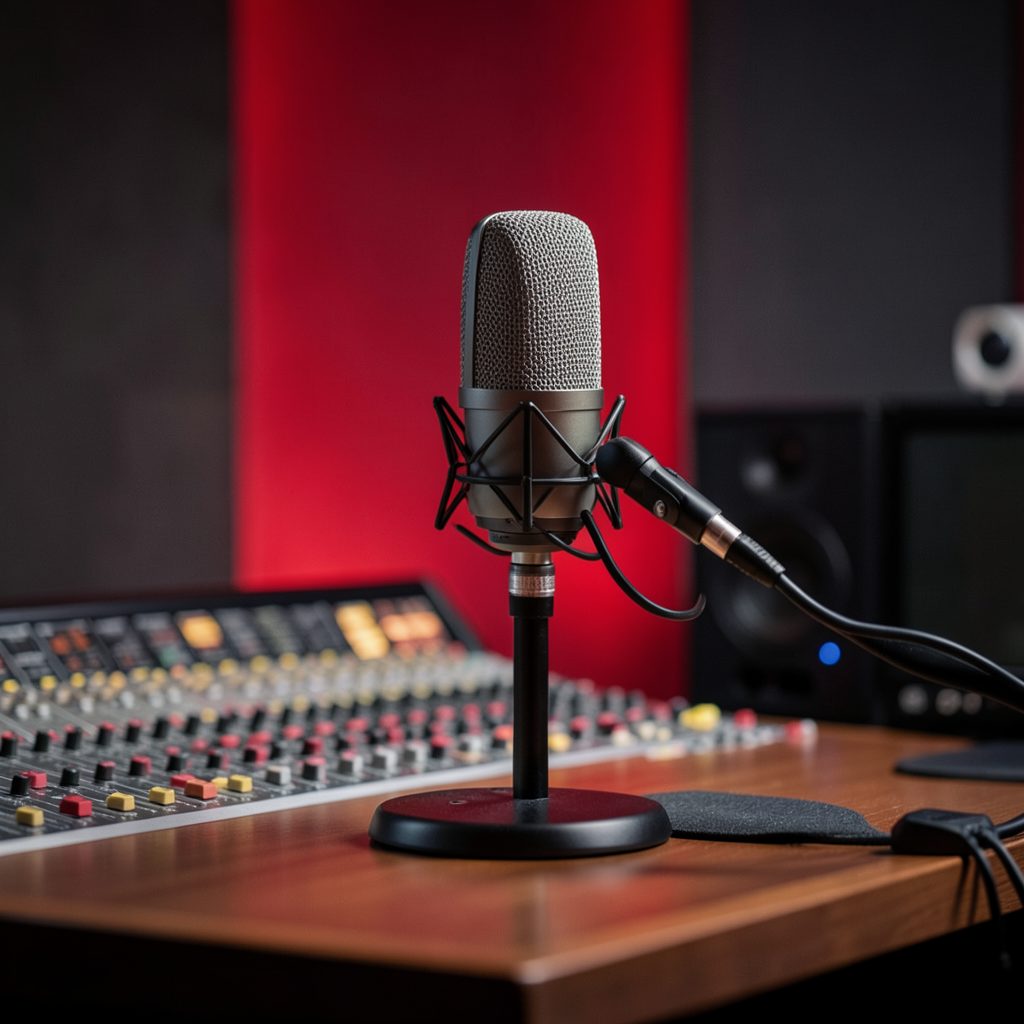
On Air & In Print
Andrea anchors the ITV lunchtime talk show Loose Women, which she joined in 2007, following 11 years as a core presenter on ITV's breakfast programme GMTV, a role she left on New Year's Eve 2008.
Alongside broadcasting, she has written for Red, Best, Scottish Woman and numerous weekly women's titles since starting as a freelance travel writer in 1993.
See Press & MediaReach & Recognition
A snapshot of the audience and impact behind Andrea's television, publishing and brand work.
This Girl Is On Fire
Andrea is CEO and Co-founder of the female empowerment platform This Girl Is On Fire, built around a mission to help women live, learn and thrive in a life they love.
Explore the PlatformScreen & Studio
Promotional and broadcast work created for television and corporate partners, including Barclaycard, Vistaprint and Wii Fit U.

Explore the Site
Find out more about Andrea's career, writing, media coverage and audience reach.
Get In Touch
For media, corporate or general enquiries, use the form below or reach out directly.
Contact details published on this site have appeared as +44 (0)20 7371 5444 / angharad.marsh@officialandreamclean.com and, on an earlier page, 020 7482 3282 / admin@officialandreamclean.com — please treat both as points of contact.