How To Prepare For A Media Appearance As A Business Owner
A media appearance can put your expertise, personality, and business in front of an audience that may never encounter your website or social channels. Whether you are invited onto a breakfast programme, interviewed for a podcast, quoted in a newspaper, or asked to join a panel, the opportunity is valuable because it allows people to hear the thinking behind your work.
Good media performance is rarely a matter of saying the perfect thing spontaneously. The strongest interviews are supported by clear preparation: knowing the audience, shaping a useful message, anticipating difficult moments, and understanding how the format affects your answers. Preparation gives you the freedom to sound natural rather than rehearsed.
For a business owner, the purpose is bigger than promoting a product or repeating a company description. A successful appearance builds authority, establishes trust, and gives viewers or listeners a reason to remember you. It can also communicate the values behind your organisation, from responsible leadership to employee wellbeing and positive social impact.
Clarify The Purpose Of The Appearance
Begin by identifying what the appearance needs to achieve. A television interview may be intended to comment on a current story, while a podcast could explore your founder journey in depth. A conference panel may position you as an industry specialist, and a local radio segment may be designed to introduce your business to a specific community.
Write down one primary objective and two supporting outcomes. Your primary objective might be to explain a change in your sector. Supporting outcomes could include demonstrating your expertise and directing people towards a useful resource. This prevents the conversation from becoming a list of unrelated promotional points.
Your objective should serve the audience as well as the business. Editors, presenters, and producers are looking for relevance, clarity, and a compelling perspective. “I want more customers” is a business goal, but it is not an interview angle. “I can explain how small firms can protect staff wellbeing while managing rapid growth” gives the media a clear reason to include you.
Review the invitation carefully and confirm the practical details. Establish the subject, length, platform, interviewer, audience, location, live or recorded status, dress expectations, technical requirements, and deadline for preparation. If the subject is sensitive, ask which areas are likely to be covered and whether there are any legal or confidentiality restrictions.
Build A Message People Can Remember
Prepare a central message in one sentence. It should express the main idea you want the audience to retain after the interview. For example: “Sustainable growth depends on designing a business that supports the people delivering it.” This message can guide your answers even when the presenter changes direction.
Support the central message with three concise points. Each point should offer a different kind of value: a fact, an example, and a practical action. Facts establish credibility, examples make your perspective relatable, and actions help the audience apply what they have heard. A simple structure also reduces the risk of speaking in long, unfocused paragraphs.
Create a small bank of evidence before the appearance. This might include customer results, carefully sourced statistics, a short founder story, or an example of a decision that changed the business. Use only information you are entitled to share. Avoid inflated claims, vague references to “research,” or numbers that you cannot explain if challenged.
Practise saying each point aloud in everyday language. Written business copy often contains long sentences and specialist terminology that sound unnatural in conversation. Replace technical expressions with familiar words, and use short sentences where the format is fast-moving. A memorable answer often contains one clear idea rather than five connected claims.
Match Your Preparation To The Format
Every medium has its own rhythm. Television usually rewards concise responses, strong openings, and visible composure. Radio and podcasts depend more heavily on vocal energy, descriptive language, and storytelling because the audience cannot see you. A written interview gives you greater control over wording, but it still requires direct answers and prompt responses.
| Media format | What the audience needs | Preparation priority | Useful delivery habit |
|---|---|---|---|
| Live television | Immediate clarity and confidence | Prepare short answers and bridging phrases | Look at the presenter or camera as directed |
| Recorded television | A clear point of view with usable soundbites | Identify phrases that can stand alone | Pause briefly before answering |
| Podcast | Depth, personality, and a strong narrative | Map your story and key lessons | Develop ideas without rushing |
| Radio | Vocal warmth and concise explanation | Prepare vivid examples and facts | Vary pace, tone, and emphasis |
| Written interview | Accurate, quotable responses | Check names, figures, and wording | Answer the question before adding context |
| Panel discussion | Distinctive insight and respectful engagement | Prepare contributions beyond your biography | Build on others’ points without disappearing |
For a live appearance, rehearse the first 30 seconds and the final sentence. The opening may involve an introduction from the presenter, but you should know the first point you want to make. A strong closing can leave the audience with a practical takeaway, a principle, or a clear description of where they can learn more.
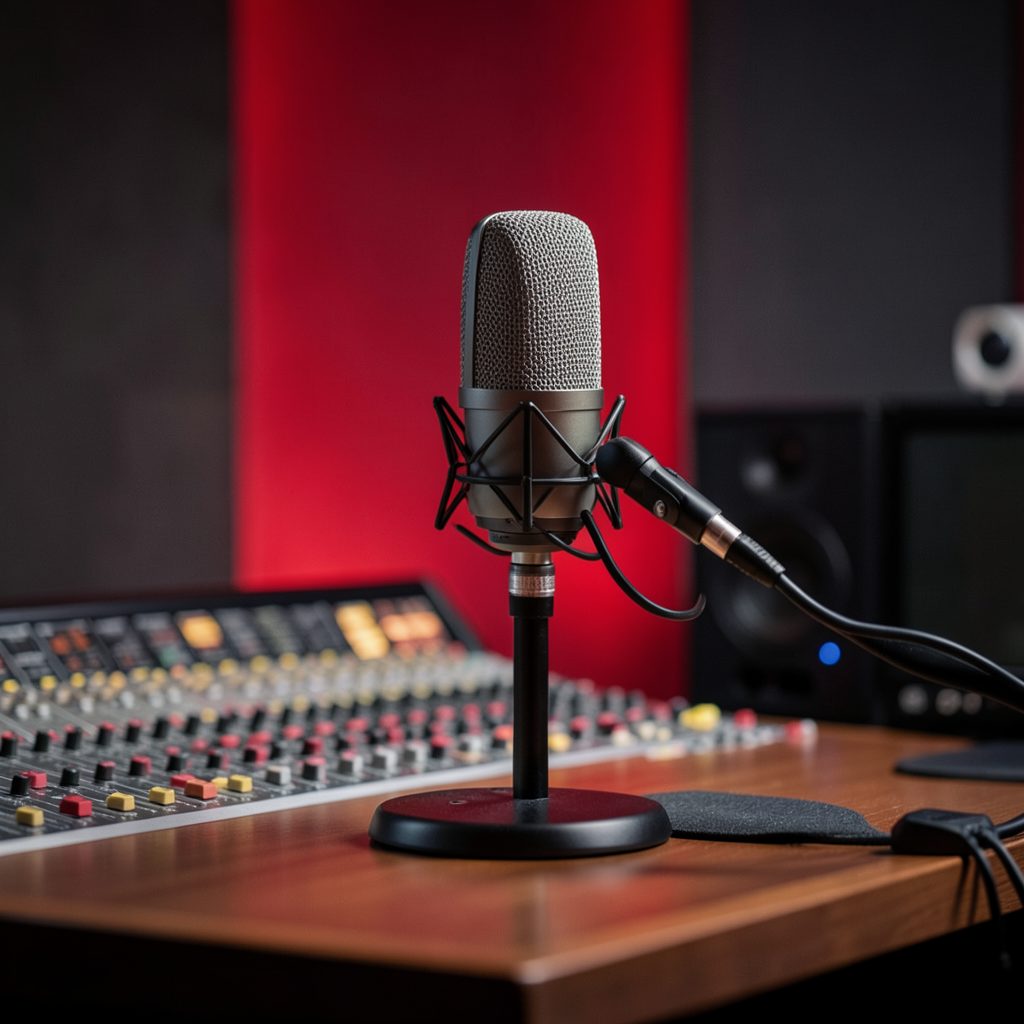
For an audio appearance, test your microphone, headphones, internet connection, and recording environment. Choose a quiet room with soft furnishings where possible. Keep water nearby, silence notifications, and place your notes where you can glance at them without creating distracting noise. Technical confidence allows you to concentrate on the conversation.
For a written interview, assume that your words may be edited for length. Give answers that remain accurate when shortened, and avoid making a statement that depends on a paragraph of qualification. Check spelling, job titles, company names, and statistics before sending your responses. Written material can circulate for years, so accuracy matters.
Rehearse Without Sounding Scripted
Rehearsal is most effective when it prepares your thinking rather than fixes every word. Ask a colleague to conduct a mock interview using your likely topics. Request follow-up questions that test assumptions, challenge your figures, or ask what your advice means in practice. This helps you develop flexible answers instead of memorising a speech.
Use a simple answer pattern when you need structure. Start with the direct answer, explain why it matters, and add an example. If the presenter asks how a business can improve staff retention, you might begin with the main principle, explain the connection between management and trust, then describe one action such as regular development conversations.
Record a practice session and assess it without judging your personality. Listen for rushed speech, repeated phrases, weak openings, and answers that take too long to reach the point. Watch for closed posture, distracting hand movements, or a tendency to look down while thinking. Select one or two changes to practise; trying to correct everything at once can make delivery stiff.
Prepare bridging language for moments when you need to return to your area of expertise. Phrases such as “The wider issue for business owners is…” or “What we have learned from our work is…” can help you answer responsibly while bringing the discussion back to your key message. Use these transitions honestly, not as a way to evade a fair question.
Handle Difficult Questions With Composure
A challenging question is not automatically a hostile one. It may reveal an area where the audience needs more explanation. Listen fully, take a short pause, and answer the question that was asked. A calm pause usually appears much shorter to an audience than it feels to the person speaking.
If you do not know an answer, say so clearly and explain what you can confirm. Never invent a figure or imply certainty where none exists. You can offer to provide verified information after the interview if the format allows. Credibility is strengthened by careful accuracy, especially when discussing health, finance, employment, or other sensitive subjects.
When a question contains a misleading premise, correct it without becoming defensive. A useful approach is to acknowledge the concern, clarify the fact, and state your position. Avoid criticising the presenter or repeating an inaccurate claim more often than necessary. Keep your language professional even when the subject is personal or controversial.
Prepare for questions about mistakes, criticism, pricing, competitors, staff issues, and business setbacks. Decide in advance which matters are confidential and which public facts you can discuss. If a legal or privacy boundary applies, state that you cannot comment and move to the relevant information you are able to share.
Your emotional regulation is part of your media skill set. Slow your breathing, keep both feet grounded, and let your voice remain steady. An interview can discuss resilience and personal growth without requiring you to disclose private experiences. Choose boundaries that protect your wellbeing and respect everyone involved.
Strengthen Your Presence Before Going Live
Professional presence begins before the interview starts. Arrive early for an in-person appearance and allow time for travel delays, wardrobe adjustments, and a technical check. For remote interviews, sign in early and confirm how the presenter will signal the start and finish. Last-minute rushing affects concentration and vocal control.
Wear clothing that helps you feel comfortable and credible while fitting the setting. Avoid anything that creates noise, reflects strong light, or competes with your face. If you are appearing on television, ask the production team about colours, patterns, and microphone placement. Your appearance should support the message rather than become the subject of it.
Pay attention to vocal delivery. Speak slightly more slowly than you might in an informal conversation, especially when discussing figures or unfamiliar terms. Vary your pitch and emphasis, and finish sentences confidently instead of allowing every statement to sound tentative. Warmth and authority can exist together.
Keep your preparation notes minimal. A single page containing the central message, three supporting points, key figures, names, and a final takeaway is usually more useful than a full script. Place it near the camera or interviewer, not directly in front of your face. Notes should prompt you, not divide your attention.
Turn The Appearance Into Lasting Value
The work continues after the interview ends. Save the recording, link, transcript, or published article, and review how your message came across. Note which answers generated interest, where you became less precise, and which phrases could be developed into future talks, articles, newsletters, or training materials.
Share the appearance in a way that adds context. A short post can explain the issue discussed, highlight one practical insight, and direct people to the full interview. Tag the programme, publication, host, and relevant contributors accurately. Avoid posting a bare link with no explanation; your audience benefits from knowing why the conversation matters.
Repurpose responsibly. A broadcast clip may become a website feature, while a podcast discussion may provide ideas for a leadership presentation. Check permissions before using footage, photographs, logos, or quotations. Credit the original outlet and preserve the meaning of the conversation when editing excerpts.
Track meaningful outcomes rather than focusing only on views. Monitor relevant website visits, enquiries, newsletter sign-ups, speaking requests, media invitations, and quality conversations with potential partners. Some of the greatest value from a media appearance appears later, when someone remembers your perspective and seeks you out for a related opportunity.
Practical Preparation Checklist
- Define one audience-focused objective and one memorable central message.
- Prepare three supporting points, with a verified fact and a relevant example for each.
- Research the presenter, outlet, audience, format, and likely lines of questioning.
- Rehearse concise answers, difficult questions, your opening, and your final takeaway.
- Test your technology, protect confidential information, and arrange a calm space before going live.
A media appearance is a chance to demonstrate how you think, lead, and communicate under attention. With a clear message, thoughtful boundaries, and practice suited to the format, you can sound prepared without losing your personality. Your business becomes more memorable when the audience encounters a credible human voice behind the organisation.
For guidance on confident communication, resilient leadership, women’s wellbeing, and purposeful professional growth, explore Andrea McLean’s speaking and event-hosting work. When your next interview or panel invitation arrives, use the opportunity to share insight that serves the audience and reflects the values you want your business to represent.
On Air & In Print
Andrea anchors the ITV lunchtime talk show Loose Women, which she joined in 2007, following 11 years as a core presenter on ITV's breakfast programme GMTV, a role she left on New Year's Eve 2008.
Alongside broadcasting, she has written for Red, Best, Scottish Woman and numerous weekly women's titles since starting as a freelance travel writer in 1993.
See Press & MediaReach & Recognition
A snapshot of the audience and impact behind Andrea's television, publishing and brand work.
This Girl Is On Fire
Andrea is CEO and Co-founder of the female empowerment platform This Girl Is On Fire, built around a mission to help women live, learn and thrive in a life they love.
Explore the PlatformScreen & Studio
Promotional and broadcast work created for television and corporate partners, including Barclaycard, Vistaprint and Wii Fit U.


Explore the Site
Find out more about Andrea's career, writing, media coverage and audience reach.
Get In Touch
For media, corporate or general enquiries, use the form below or reach out directly.
Contact details published on this site have appeared as +44 (0)20 7371 5444 / angharad.marsh@officialandreamclean.com and, on an earlier page, 020 7482 3282 / admin@officialandreamclean.com — please treat both as points of contact.