Why I schedule monthly brainstorming sessions with no agenda
For years, every working hour on my calendar was a fortress of bullet points, colour-coded folders and pre-circulated briefs. Then, somewhere between hosting a live event in Manchester and finishing the edits on my book, I realised that the most valuable ideas were the ones that had no appointment. I started blocking out one afternoon every month and protecting it the way I would protect a television interview slot or a hospital appointment. There was no agenda, no slides, no expected outcome. Just me, a notebook, a window, and a cup of tea. That small ritual has reshaped the way I write, speak and lead, and it is something I now recommend to founders, producers and corporate teams in every boardroom I visit from Sydney to Perth.
The pressure to be permanently productive is something I see everywhere in my work. I travel frequently to Australia, working with brands along the George Street corridor in Sydney, with creative agencies in Fitzroy, and with leadership teams in Brisbane's riverside precincts. Audiences in Melbourne, Adelaide and beyond often tell me they feel crushed by back-to-back video calls, Slack threads and "quick syncs" that somehow eat an entire day. A no-agenda session is my gentle rebellion against that pattern. It is not a holiday and it is not a luxury; it is a discipline that gives the brain permission to wander, and wandering is where the most original thinking tends to happen.
There is also a cultural fit that I find appealing. Australian workplaces often pride themselves on the "fair go" and on giving people room to have a say, yet ironically the meeting culture can be rigid, hierarchical and over-structured. By carving out time with no brief, I find that junior voices speak up, dormant ideas resurface, and the usual suspects stop dominating the room. The session becomes a level playing field where a production runner in Surry Hills can pitch the same concept as a managing director, and both are listened to with equal attention.
What I have learned, more than anything, is that the blank page is not an empty threat. It is an invitation. When I treat one afternoon a month as a studio rather than a schedule, the rest of my work becomes sharper, kinder and braver. I write better speeches, host better events, and feel less like a machine that converts caffeine into output. This piece is, in a way, an open invitation for you to try the same.
The case for an unscheduled hour
Most of us have been taught that productivity is a numbers game: more meetings, more deliverables, more boxes ticked. A no-agenda session breaks that loop. It reframes the hour as a space for input rather than output, which sounds counter-intuitive until you remember that every great piece of work I have ever produced began as a messy, unfiltered thought long before it became a chapter, a keynote or a campaign. When I sit down with nothing planned, I am reminding my brain that thinking is also a form of doing.
The practice also serves as a pressure valve. In a typical month I might be writing a magazine column, preparing for a corporate keynote and negotiating the next season of a television project, sometimes in the same week. Without a regular pressure release, the tension builds up and the work suffers. A monthly unscheduled hour is like opening a window in a stuffy room. You do not notice the benefit until you try it, and then you cannot imagine going back to sealed-glass thinking.
| Structured meeting | No-agenda session |
|---|---|
| Pre-circulated agenda and slides | Nothing shared in advance |
| Outcome-driven, decisions logged | Open-ended, outcomes may surprise you |
| Senior voices often dominate | Quieter voices feel safe to speak |
| Fits a project plan or Gantt chart | Lives outside the project plan |
| Usually one hour, rarely more | A flexible block, often 60 to 90 minutes |
| Easy to defend in a status update | Harder to justify, but worth the fight |
The table above is a rough sketch of the contrast. I share it because leaders often ask me how to pitch this idea to their own teams. Pointing to the differences makes the value visible without turning the session into another corporate deliverable. A facilitator I worked with in Sydney's Ultimo precinct once called this approach "creative oxygen", and the phrase has stuck with me ever since.
What actually happens when there is no brief
I start with a notebook, a pen and a single question written at the top of the page. The question changes each month. Sometimes it is "what is the one story I am avoiding telling?" Sometimes it is "what would I write if no one were watching?" I give myself thirty minutes to free-write around the question, without crossing anything out, without checking my phone, without judging. The rule is simple: the page wins. If a sentence feels clumsy, I leave it clumsy. If an idea feels absurd, I let it breathe.
Around the halfway mark, I switch to voice notes. I walk around my home or, if I am in a hotel in Melbourne or Brisbane, I walk the streets and dictate thoughts into my phone. The change of medium wakes up a different part of the brain. Writing is slow and edited; speaking is fast and unguarded. The combination produces a kind of intellectual cross-training, and the raw material I capture often becomes the seed for a speech, a book chapter, or a campaign idea I would never have reached through conventional planning. When I am preparing a high-stakes talk, I sometimes pair this ritual with my top tips for writing a speech that resonates, so the unfiltered thinking has somewhere to land.
The final third of the session is reserved for play. I might sketch a mind map, doodle on a large sheet of paper, or use a tool like meme templates to test a concept in a low-stakes format. I have lost count of the number of social campaigns that began as a silly image or a caption. Play is the engine of originality, and structured meetings almost never allow for it. By giving play a calendar slot, I am telling my brain that the work of being creative deserves a room of its own.
Why unstructured thinking beats a polished deck
A polished deck is a record of what we already know. An unstructured session is a hunt for what we do not yet know. That difference matters more than people realise, especially in fast-moving sectors like media, retail and technology. I have sat in countless pitch meetings where the slides were beautiful and the thinking was thin. I have also sat in chaotic kitchen-table conversations in Adelaide and Fremantle where the rough ideas were worth a hundred slides, because they came from genuine curiosity rather than performative preparation.
When I lead corporate workshops, I often start by tearing up the printed agenda. It shocks people at first, and then it liberates them. The energy in the room shifts when the facilitator says, "We are not here to confirm a plan. We are here to discover a question we have not asked yet." Within fifteen minutes, the conversations become more honest, the body language loosens, and the usual corporate armour starts to come off. I have watched production assistants in Perth out-think senior partners simply because the format gave them permission.
The other reason unstructured thinking wins is that it respects the way the brain actually works. Insight rarely arrives at the appointed hour. It tends to surface in the shower, on a walk along the Yarra, in the back of an Uber on the way to a studio in Eveleigh, or during a quiet coffee in a Carlton café. By scheduling a no-agenda session, I am deliberately creating the conditions in which insight can show up. I am not forcing the muse; I am building her a chair and offering her a cuppa.
The ripple effect on teams and clients
When I bring this idea into organisations, the change is rarely limited to the individual. Teams that protect a no-agenda slot each month tend to communicate more openly, argue more productively and recover faster from setbacks. A senior leader at a financial services firm in Sydney once told me that her team's monthly unscheduled hour had done more for retention than a new parental leave policy. The reason was simple: people felt heard, not just managed.
Clients notice the difference too. If you are a founder pitching for investment, or a creative director presenting a campaign, the energy you bring into the room is shaped by the quality of the thinking you have done behind the scenes. An hour of unfiltered brainstorming each month makes you a more generous collaborator, because you are no longer clutching at ideas in the meeting. You are offering ideas that have already been tested in private, refined, and sometimes discarded. For organisations that want to bring this into their corporate culture, my corporate speaking work often begins with a workshop built around exactly this principle.
There is also a softer benefit. When I speak to women's networks in Brisbane and Melbourne, many of the women I meet are running on empty, balancing caregiving, careers and creative ambitions. A no-agenda session is, for them, a form of self-respect. It says, "Your inner life matters. Your private ideas matter. You are not just a deliverable machine." I have seen that reframe change the way women show up in their workplaces, and the way they treat themselves on a Sunday evening. If you are reading this and feeling a little lost about your direction, I wrote a piece on how to find your purpose when you feel lost that pairs well with this practice.
Making the practice work in a busy schedule
A common worry I hear from clients is that adding another ritual will only add more pressure. The truth is the opposite. A no-agenda session should feel lighter than a regular meeting, not heavier. I keep mine to ninety minutes at most, and I treat the first ten as warm-up. If nothing useful emerges, that is fine. The point is the practice, not the output. Some of my most rewarding sessions have produced nothing tangible at all, yet somehow unblocked a project I had been wrestling with for weeks.
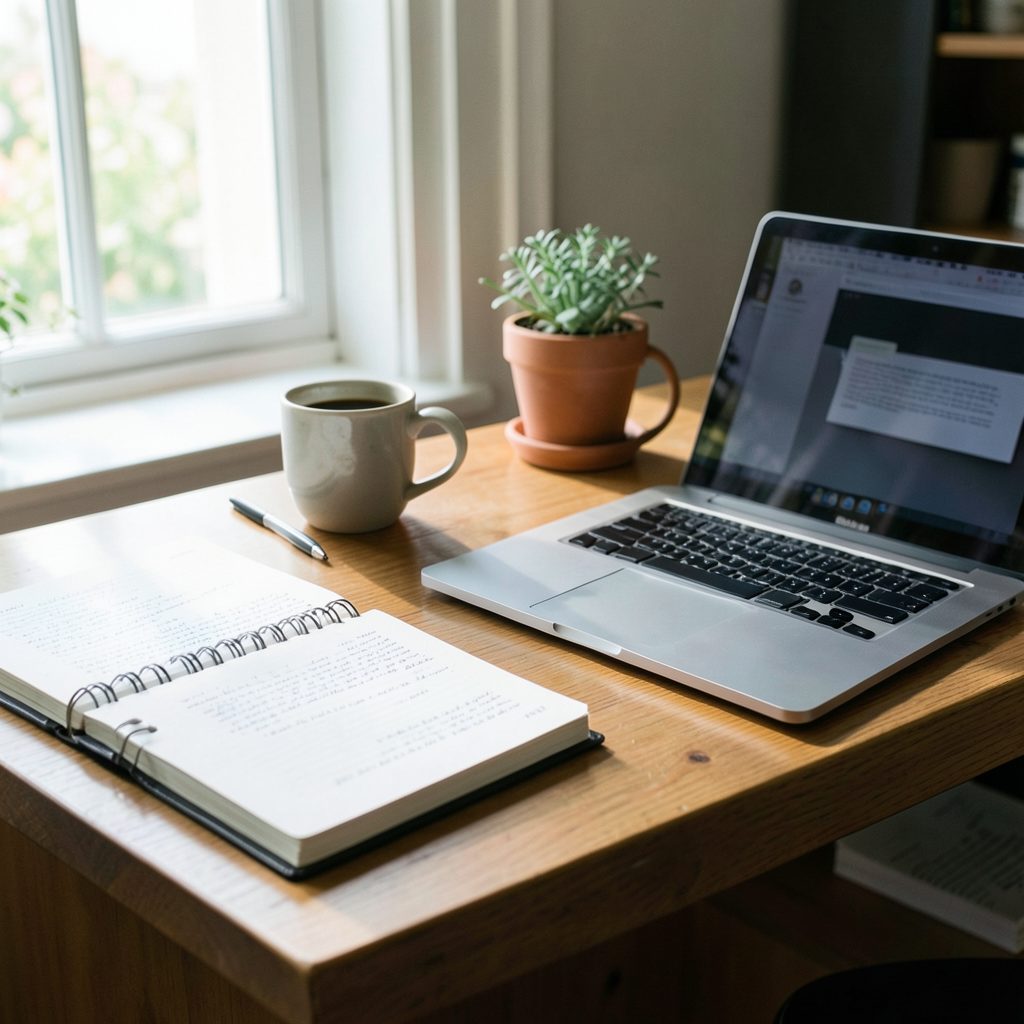
I also recommend a small kit: a notebook you genuinely like, a pen that feels good in your hand, a glass of water and, if you are in Australia, a flat white from your local café before you start. Sound matters too. Some months I work in silence. Other months I play a single album on repeat. The consistency is the ritual, not the content. If you can, find a room with a window. Light helps the brain do its slow, associative work.
Finally, be patient with yourself. The first session might feel awkward, especially if you have spent years in structured environments. By the third or fourth month, you will start to recognise the voice in your own head that knows the difference between a forced idea and a real one. That voice is worth its weight in gold, and it tends to go quiet in the noise of ordinary workdays. Protect it. Schedule it. Trust it. If you are ready to give it a go, here are a few gentle ways to begin.
- Block ninety minutes on the same day each month, and label it "thinking" rather than "meeting".
- Choose one open-ended question before you begin, and let it guide you without forcing an answer.
- Switch mediums at least once during the session, moving between writing, speaking and drawing.
- Leave your phone in another room, or at least on silent, and resist the urge to "just check" messages.
- Treat the output as raw material, not a finished product, and give yourself permission to be messy.
- Pair the practice with a walk afterwards, ideally somewhere green, so the brain can consolidate the work.
- Revisit your notes thirty days later, and notice which seeds have quietly grown into something real.
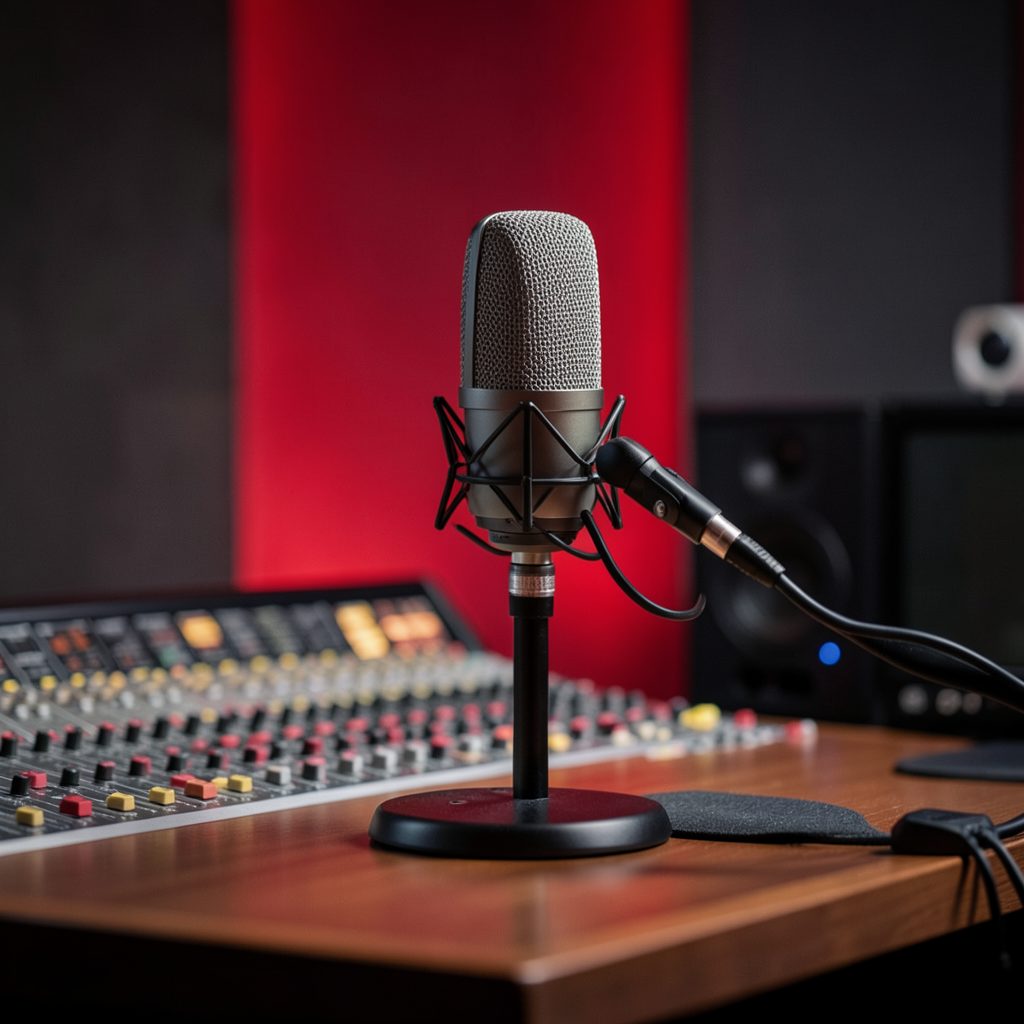
On Air & In Print
Andrea anchors the ITV lunchtime talk show Loose Women, which she joined in 2007, following 11 years as a core presenter on ITV's breakfast programme GMTV, a role she left on New Year's Eve 2008.
Alongside broadcasting, she has written for Red, Best, Scottish Woman and numerous weekly women's titles since starting as a freelance travel writer in 1993.
See Press & MediaReach & Recognition
A snapshot of the audience and impact behind Andrea's television, publishing and brand work.
This Girl Is On Fire
Andrea is CEO and Co-founder of the female empowerment platform This Girl Is On Fire, built around a mission to help women live, learn and thrive in a life they love.
Explore the PlatformScreen & Studio
Promotional and broadcast work created for television and corporate partners, including Barclaycard, Vistaprint and Wii Fit U.
Explore the Site
Find out more about Andrea's career, writing, media coverage and audience reach.
Get In Touch
For media, corporate or general enquiries, use the form below or reach out directly.
Contact details published on this site have appeared as +44 (0)20 7371 5444 / angharad.marsh@officialandreamclean.com and, on an earlier page, 020 7482 3282 / admin@officialandreamclean.com — please treat both as points of contact.