Why I keep a physical mood board for long-term creative goals
I have always been drawn to ideas that can be seen, touched and rearranged. A physical mood board gives my long-term creative goals a place to live beyond a notebook, phone screen or passing thought. It turns an ambition into something I encounter in ordinary moments: while making coffee, preparing for a presentation or tidying my desk.
My board is not a glossy collage designed to prove that I have everything sorted. It is a working document. It holds images, phrases, colours, handwritten notes and reminders of the kind of energy I want to bring into my life and work. Some pieces stay for years; others are removed when they have served their purpose.
That tactile process matters to me because creativity rarely moves in a straight line. A television career, a book, a speaking opportunity or a platform supporting women’s wellbeing can begin as a feeling long before it becomes a plan. The board helps me notice that feeling, protect it and gradually turn it into action.
It gives an abstract ambition a physical shape
Long-term goals can become vague very quickly. “I want to write another book” or “I want to speak to larger audiences” sounds meaningful, yet the language is broad enough to postpone indefinitely. A physical mood board makes the idea specific. It asks me to decide what that future looks like, feels like and stands for.
For a creative project, I might include a photograph that captures the atmosphere I want, a colour palette that reflects the emotional tone, or a newspaper clipping that reminds me why the work matters. I may add a line about courage, a location where I would love to speak, or an image representing the women I hope to reach. These details create a visual language around the goal.
The board also reveals when I am pursuing someone else’s definition of success. If every image feels polished, expensive and distant from my real values, I know I need to look again. A useful vision board should create recognition, not pressure. It should make me think, “That feels like me,” rather than, “I must become a completely different person.”
It keeps creative thinking away from the scroll
Digital tools are brilliant for collecting references. I save photographs, articles and design ideas constantly, yet an online folder can become a crowded archive. Once something is filed away, it is easy to forget. A physical board stays visible and interrupts the automatic rhythm of checking email, social media and notifications.
There is also a different quality to handling paper. I can tear an image from a magazine, write across it, overlap two unrelated ideas and move pieces around until a new connection appears. That kind of visual brainstorming is deliberately slower. It gives my mind room to wander, which is often where the strongest creative direction emerges.
This is particularly useful when planning work for an Australian audience. A campaign or speaking event might need to feel relevant in Sydney, Melbourne, Brisbane or a regional community rather than simply resembling something imported from overseas. I may pin a photograph of Melbourne’s winter light, a note about the directness of Australian conversation or a reference to the relaxed atmosphere people expect at a local event. The board helps me hold those nuances together.
It turns rejection into useful evidence
Creative work includes rejection. A proposal may be declined, a book idea may take longer than expected, or an event concept may not find the right audience immediately. Those moments can feel personal, especially when a project has been carrying emotional significance for months.
I use my mood board to return to the purpose beneath the outcome. If a particular opportunity falls away, the images and words can remind me that the bigger goal may still be sound. The route has changed; the destination has not necessarily disappeared. I have written about using rejection as fuel because a refusal can contain information without becoming a verdict on your talent.
The board makes that distinction visible. I can remove an image connected to a specific publisher, venue or format while keeping the phrase that expresses the deeper ambition. That physical edit is surprisingly powerful. It says, “This version did not happen,” rather than, “Nothing will happen.”
Australian working life has its own practical realities here. A project might need to fit around school holidays, long travel between Perth and the east coast, or the timing of the financial year when organisations review budgets. Creative momentum can look slower when the market is geographically spread out. Keeping the larger intention in view helps me stay patient without becoming passive.
It helps me make decisions that protect the work
A mood board is also a boundary-setting tool. Every new invitation can sound flattering, and creative people are often encouraged to say yes quickly. Yet a full diary does not automatically mean meaningful progress. If an opportunity does not connect with the values and direction represented on my board, I pause before accepting it.
That pause can be uncomfortable. Many of us have learned to equate availability with kindness, professionalism or ambition. I have explored saying no with confidence because a clear no can protect the time and energy needed for a more important yes. My board gives that decision a reference point. I am not rejecting work at random; I am checking whether it belongs in the life I am deliberately building.
This is useful for corporate speaking and event hosting, where every brief has its own priorities. One client may want a high-energy keynote on leadership, while another needs a thoughtful conversation about resilience and women’s wellbeing. The work can vary while still fitting the wider purpose. A board helps me recognise the difference between healthy variety and constant distraction.
It also encourages practical choices. If the board contains an image of a book manuscript, I need protected writing time. If it reflects a larger speaking career, I need to maintain my media materials, rehearse ideas and build relationships with event organisers. Visual inspiration becomes valuable when it leads to a calendar entry, a phone call or a finished draft.
It makes progress visible when the goal is slow
Long-term creative work often advances in small increments that are easy to overlook. One conversation, one chapter, one media appearance or one workshop may not feel transformative on its own. Over time, those steps can create a body of work. A physical board allows me to see the accumulation.
I sometimes add small markers beside the main images: a date, a completed milestone or a sentence from feedback that mattered. These notes stop the board from becoming a fantasy space detached from real effort. They show the less glamorous parts of progress, including rewriting, administration, preparation and recovery.
There is a particular value in displaying that journey in a home or office in Australia, where our workspaces can shift with the season. A board may sit near a bright window during a Brisbane summer or beside a desk while a Melbourne afternoon turns grey. Its presence remains steady even when routines change. It becomes an anchor through busy periods, travel and the inevitable arvo when concentration disappears.
The board can also support collective creativity. When I am working with a team, selected elements give people a shared starting point. Rather than explaining an atmosphere through a long brief, I can show the emotional direction and invite interpretation. That is especially helpful when a project involves writers, producers, designers or event partners working across different cities.
It evolves as I do
A physical mood board should never become a shrine to an old version of your life. I review mine regularly and ask whether the images still carry energy. Some remain because they express a lasting value. Others come down because they belonged to a goal I have completed, outgrown or understood differently.
The review is gentle rather than judgmental. I do not treat every unfinished idea as a failure. Sometimes an image has done its job by leading me towards a new possibility. Sometimes a goal needs a smaller, more realistic form. A dream of reaching a huge audience might become a commitment to one honest conversation, one well-made podcast or one room where people feel seen.
I also keep evidence of where the work has already travelled. A programme from an event, a printed review or a photograph from a meaningful conversation can sit alongside the original aspiration. My speaking and media work has developed through many such moments, and keeping a few physical reminders helps me remember that a career is built from chapters rather than a single breakthrough.
The most useful board is therefore both imaginative and honest. It can hold ambition beside uncertainty, beauty beside paperwork and a bold future beside the next manageable step. The following simple distinction helps me decide what belongs on it and what belongs in a project plan.
| A mood board is useful for | A project plan is better for |
|---|---|
| Capturing the emotional tone of an idea | Listing tasks and deadlines |
| Showing the people, places and values behind the work | Assigning responsibilities |
| Finding visual connections between unrelated thoughts | Tracking budgets and contracts |
| Keeping a long-term purpose visible | Measuring deliverables and results |
| Renewing motivation during a slow phase | Recording detailed logistics |
Keeping a physical mood board for long-term creative goals works because it brings the future into contact with the present. It does not promise that every image will become real or that every path will stay open. It gives me a visible reminder of what I care about, a space to revise the route and a practical prompt to keep moving.
For me, creativity needs both freedom and structure. The board provides the freedom to imagine widely, while its position in the room creates a quiet structure around that imagination. Over time, the scraps of paper become a record of attention: what I noticed, what I chose, what I released and what I continued to believe in.
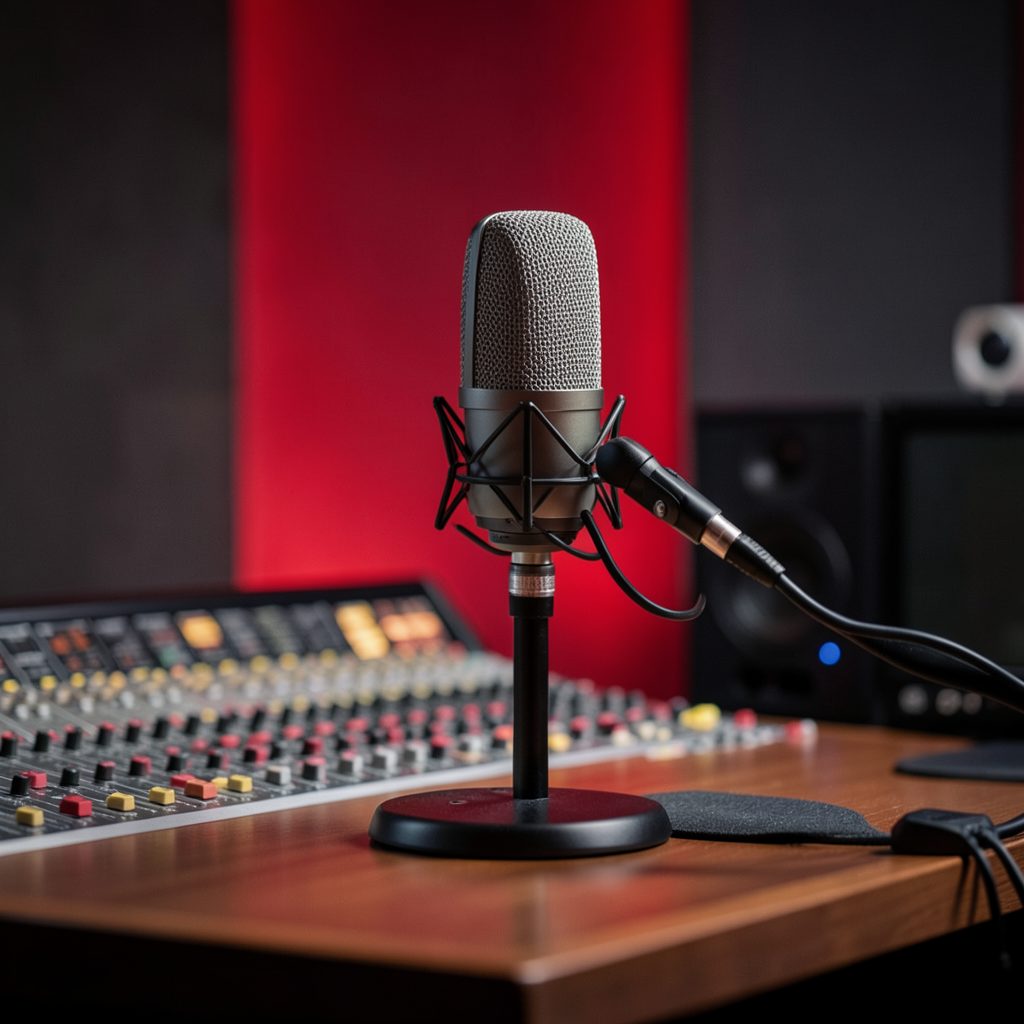
On Air & In Print
Andrea anchors the ITV lunchtime talk show Loose Women, which she joined in 2007, following 11 years as a core presenter on ITV's breakfast programme GMTV, a role she left on New Year's Eve 2008.
Alongside broadcasting, she has written for Red, Best, Scottish Woman and numerous weekly women's titles since starting as a freelance travel writer in 1993.
See Press & MediaReach & Recognition
A snapshot of the audience and impact behind Andrea's television, publishing and brand work.
This Girl Is On Fire
Andrea is CEO and Co-founder of the female empowerment platform This Girl Is On Fire, built around a mission to help women live, learn and thrive in a life they love.
Explore the PlatformScreen & Studio
Promotional and broadcast work created for television and corporate partners, including Barclaycard, Vistaprint and Wii Fit U.
Explore the Site
Find out more about Andrea's career, writing, media coverage and audience reach.
Get In Touch
For media, corporate or general enquiries, use the form below or reach out directly.
Contact details published on this site have appeared as +44 (0)20 7371 5444 / angharad.marsh@officialandreamclean.com and, on an earlier page, 020 7482 3282 / admin@officialandreamclean.com — please treat both as points of contact.