Reading Your Keynote Aloud to a Trusted Friend
For more than two decades I have presented live to audiences in studios, conference halls, and on stage in places as varied as a London morning show sofa and a corporate retreat in the Scottish Highlands. Through every single one of those broadcasts and speeches, one quiet ritual has stayed with me. Before I deliver a keynote anywhere, I read the whole thing aloud, start to finish, to a trusted friend. Not a colleague who will flatter me, not a coach being paid to nod, but a person whose honesty I trust more than my own confidence.
It sounds like a small thing. It is not. The first time I skipped the step, I learned the lesson the hard way, and I have never skipped it since. Reading silently on a screen can make a sentence feel finished when it is not yet ready to be spoken. Reading aloud forces you to live inside the words, to feel where your breath catches, where a phrase trips, where the audience will lean in and where they will switch off. A trusted friend sitting across from you, listening, catches every weakness your own ears have politely ignored.
The Night I Almost Sent a Broken Speech on Stage
The first keynote I ever gave on my own outside of broadcasting was a leadership event for a women's network in Birmingham. I had drafted the talk over a weekend, polished it on Monday morning, and by Tuesday afternoon I was convinced it was tight. The words looked elegant on the page. I had even timed it to the second. What I had not done was open my mouth and say any of it out loud. Not to myself, not to anyone.
I ran through it once on stage about an hour before the doors opened. Within the first ninety seconds I knew something was wrong. A phrase I had thought was punchy stumbled over my tongue. A reference I assumed was clear needed three extra sentences of explanation. By the time I reached the halfway mark I had lost two minutes I could not get back. I rewrote half of it in the wings, fifteen minutes before the audience walked in, and the version they heard was functional rather than the version I had hoped to deliver. I remember promising myself, as I walked off stage that evening, that I would never again trust the silent version of a script. The lesson joined a catalogue of small disciplines I have gathered across thirty years of broadcasting, and it sits comfortably alongside reflections I have shared on patience learned on location when the cameras are running.
What Makes a Rehearsal Listener Worth Their Weight
A trusted friend for this purpose is not the same as a friend who likes you, and it is absolutely not the same as a friend who works in your industry. The qualities I look for are simple and rare. They listen more than they speak. They tell me the truth before they tell me I am wonderful. They have the patience to sit through a full fifteen-minute run without checking their phone and the nerve to say, halfway through, "that bit just lost me."
I have a small handful of people I trust with this job. One is a former producer who saw me through every broadcast stumble of my twenties. Another is an old university friend who runs a theatre company in Bristol and treats every script like a play. They each catch different things. The producer hears phrasing that sounds like television rather than conversation. The theatre director hears where the rhythm falls flat. Together they make a feedback filter no single voice can provide.
Here is what I have learned about the difference between rehearsing alone and rehearsing with a trusted friend:
| Rehearsing alone | Rehearsing with a trusted friend |
|---|---|
| You hear what you expect to hear | You hear what an outsider actually notices |
| Filler words slip past unnoticed | Filler words get named and tamed |
| Pacing feels right until you run over | Pacing problems surface in real time |
| Confidence can mask a weak section | Weak sections are flagged before the stage |
| Feedback arrives after the event | Feedback arrives while it can still be used |
If you are wondering whether you have someone like this in your life, the test is straightforward. Ask them a question about a piece of writing you care about and listen to the answer. If they tell you what they actually think, including the bits that sting, you have found your person. If they reassure you without engaging with the work, keep looking.
What Reading Aloud Actually Shows You
There is a kind of writing that looks fluent on a page and turns out to be exhausting to deliver. There is also a kind that looks rough on a page and flows beautifully when spoken. Reading aloud is the only reliable way I know to tell the difference. The moment you say a sentence out loud, your body starts to give you signals. Your shoulders tighten when a phrase is too long. Your breath runs short when a clause needs splitting. Your pace quickens when you are trying to crowd too many ideas into a single line.
A trusted listener notices things you cannot notice about yourself. They will hear the filler words you have not realised you lean on. They will spot the moment where your energy dips because the script is asking you to be enthusiastic about something that does not actually move you. They will tell you, kindly and firmly, when a story you find charming is actually just confusing. None of this shows up when you read in your head. All of it shows up when you read aloud.
I also use the rehearsal to test pacing and pause. The written version of a keynote can look like a wall of text and still have plenty of air in the spoken version, but only if you build the pauses in deliberately. I read the script and mark breath points in pencil. I read it again and time the laughs. I read it a third time and listen for the moments when I am racing. The friend across the table will catch all of this faster than any stopwatch, and if you would like to see what a marked-up rehearsal sounds like in practice, videos from the site walk through the routine in detail.
Bringing the Practice Into Australian Rooms
I have delivered keynotes in Australia more times than I can count on one hand, and the rehearsal habit travels beautifully across the distance. The venues vary enormously, from the grand sweep of the Sydney Opera House to the businesslike efficiency of the Melbourne Convention and Exhibition Centre and the warmer, more intimate feel of a Brisbane boardroom lunch. The acoustics differ, the audience expectations differ, and the local cadence of English differs too. A line that lands in Glasgow may need a small adjustment for a Sydney crowd, and a phrase that sounds natural in Manchester may need a softer edge for an Adelaide audience.
Australians have a particular gift for cutting through corporate puffery. If a line sounds as though it was written by a committee, an Australian audience will let you know, usually with a kind smile and a politely raised eyebrow. That is one of the reasons I always run my Australian keynotes past a friend who knows the local sensibility, even if she is reading it from London on a video call. She will hear when a reference needs to be swapped for something that lands in Circular Quay rather than Canary Wharf. She will catch the moment when I have accidentally slipped into a rhythm that feels too formal for a country whose own broadcasters treat conversation as a contact sport.
There is also the small matter of vocabulary. A friend who knows the market will tell you that "arvo" means afternoon in a way that a dictionary will not, that "servo" is a petrol station, that "brekkie" is breakfast and that the average Australian will be slightly bemused if you use the word "queue" without ever having formed one. None of this means you need to pepper your keynote with local slang. It means you need to make sure your words do not sound imported from somewhere they do not belong. Reading aloud to someone who understands the room is the quickest way I know to find the right tone for any city you are about to speak in.
How to Make the Habit Your Own
If you have never read a keynote aloud to a friend before, the first step is the smallest one. Pick a piece of writing you already care about, a talk you have given or a script you are working on, and offer to read it to someone you trust. Tell them in advance that you want honesty, not encouragement. Give yourself permission to be a bit embarrassed. The first run-through is rarely smooth and that is precisely the point.
Block out the time the way you would block out a flight. A fifteen-minute keynote needs at least an hour, including the listening and the conversation afterwards. Switch off the notifications. Have a pen in hand so you can mark the script as you read. Record it on your phone if you can bear to listen back. Then ask your listener three questions. What landed? What confused you? Where did you switch off? Their answers, taken together, are a roadmap.
Over the years I have written more about the craft of preparation, the patience it demands, and the small disciplines that hold a keynote together when the lights come up. You can find further reading on these themes in my wider collection of articles, where I write at greater length about the work behind the work.
There is one last thing worth saying. The trusted friend is not there to make you sound like someone else. They are there to help you sound like yourself, only clearer, only braver, only more awake. When the rehearsal is finished and the real audience walks in, you will feel the difference in your shoulders before you feel it in your voice. That, more than anything, is why I keep reading my speeches aloud to a trusted friend before every keynote.
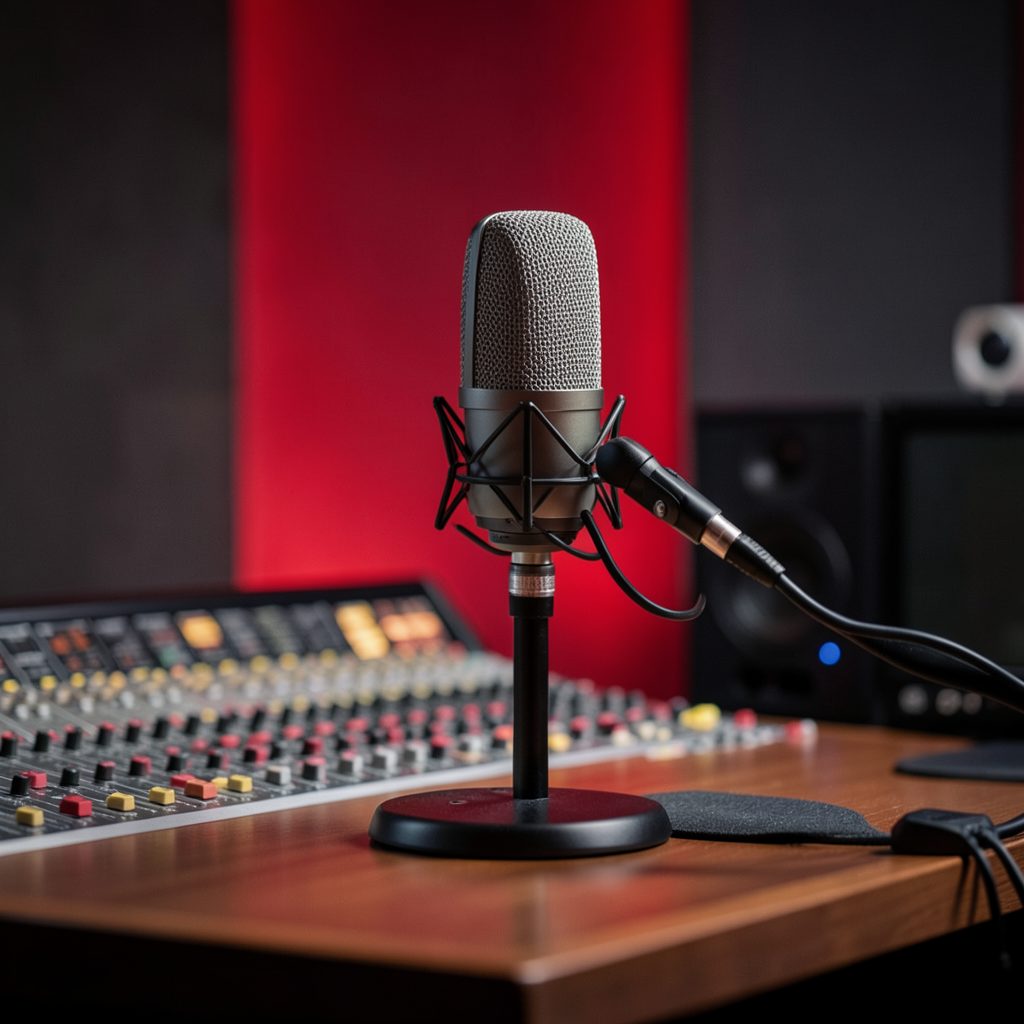
On Air & In Print
Andrea anchors the ITV lunchtime talk show Loose Women, which she joined in 2007, following 11 years as a core presenter on ITV's breakfast programme GMTV, a role she left on New Year's Eve 2008.
Alongside broadcasting, she has written for Red, Best, Scottish Woman and numerous weekly women's titles since starting as a freelance travel writer in 1993.
See Press & MediaReach & Recognition
A snapshot of the audience and impact behind Andrea's television, publishing and brand work.
This Girl Is On Fire
Andrea is CEO and Co-founder of the female empowerment platform This Girl Is On Fire, built around a mission to help women live, learn and thrive in a life they love.
Explore the PlatformScreen & Studio
Promotional and broadcast work created for television and corporate partners, including Barclaycard, Vistaprint and Wii Fit U.

Explore the Site
Find out more about Andrea's career, writing, media coverage and audience reach.
Get In Touch
For media, corporate or general enquiries, use the form below or reach out directly.
Contact details published on this site have appeared as +44 (0)20 7371 5444 / angharad.marsh@officialandreamclean.com and, on an earlier page, 020 7482 3282 / admin@officialandreamclean.com — please treat both as points of contact.