Why I Arrive Early To Walk The Speaking Stage
I have learned that the quality of a speaking event is often shaped before the audience takes its seats. The first few minutes inside a venue can tell me a great deal: how the room carries sound, where the light falls, whether the stage feels open or confined, and how easily I can move through the space. That is why I arrive early whenever I can and walk the stage before I speak.
This habit began through years of live television, broadcasting, journalism and public appearances, where there is very little room for pretending that preparation does not matter. A studio floor, conference stage and theatre platform each have their own rhythm. You can feel when a space is ready to support you, and you can also sense when a small practical detail might become a distraction.
For Australian events, that preparation matters even more because the speaking circuit can involve very different settings. One week may mean a hotel ballroom in Sydney, followed by a breakfast conference in Melbourne, a corporate gathering in Brisbane or an event in a regional centre where the venue has been adapted for the occasion. Each room presents its own conditions, and I want to meet those conditions before the audience arrives.
Walking the stage is not a performance of confidence. It is a way of creating confidence through familiarity. By the time I step into the spotlight, I want my attention available for the people in front of me, the message I am there to deliver and the conversation that may follow.
The Room Begins Before The Audience
When I enter a venue, I first take in the room as an audience member might. Where is the entrance? How far is the stage from the first row? Are there pillars, cameras, large screens or floral arrangements that change the sightlines? A stage can look spacious from the wings and surprisingly narrow once you are standing at its centre.
I also notice the relationship between the platform and the people listening. If the stage is high, I need to make sure my movement and eye contact still feel warm. If it is low, I may be able to step closer to the audience. At a leadership event in Melbourne, for example, the most effective point may be the front edge of the stage, while at a formal gala in Sydney I might need to work within a marked area beside a lectern.
These details influence how I tell stories. A personal story about burnout, wellbeing or starting again needs a different physical quality from a high-energy opening. I do not want to discover halfway through a keynote that the room requires me to stand in one fixed spot, or that I have been speaking towards a wall of lights rather than towards the audience.
My professional background has taken me through many versions of that environment, and the story of my career helps explain why I treat the venue itself as part of the work. The room is not a neutral container. It becomes part of the conversation.
Finding The Natural Place To Stand
Walking the stage lets me find the places where I feel most grounded. There is usually a point where my feet settle, my shoulders relax and my voice feels as though it can travel. I may begin there, then move deliberately to another position when I want to shift the energy or include a different part of the audience.
That movement should have purpose. Wandering can make a speaker appear unsettled, especially when the subject is personal. I do not want to pace simply because I am nervous. I want to move when I am changing the thought, opening a new story or inviting people into a practical reflection.
I check whether the floor is slippery, uneven or covered with a cable ramp. I look at where the steps are and whether I can safely move around a monitor. A beautiful stage design is still a working space, and a presenter needs to know how that space behaves. A long dress, high heels or a handheld microphone can alter the way I move, so I prefer to understand those factors before the room fills.
Australian venues can have their own surprises. A conference centre near the coast may bring bright afternoon glare through windows, while a Brisbane ballroom can feel warm under stage lighting. In a large exhibition space, the carpet, air conditioning and distance from the audience can make the room feel less intimate than expected. A short walk gives me information that a running sheet cannot provide.
Testing Sound, Light And Sightlines
A microphone check is essential, but I listen for more than whether the microphone turns on. I speak at the volume I expect to use, pause, laugh and move a few steps. I want to know if my voice changes when I turn my head, whether the sound becomes muffled near the wings and whether the audience will hear the quieter parts of a story.
I ask the production team about the lectern, confidence monitor, clicker and timing signals. If I am using slides, I check that the screen can be seen from the back and from the sides. If the event includes a filmed interview or a livestream, I find out where the cameras are so that I can include the wider audience without accidentally turning away from the people watching online.
Lighting is another reason I walk the platform. A spotlight can make it difficult to see faces, particularly when the audience is seated in a darkened room. I need to know where I can look when I want a genuine response. Eye contact is central to a talk about resilience or women’s wellbeing; it cannot happen if I am staring into a bank of lights.
I also confirm practical matters that can otherwise create unnecessary strain: whether water is within reach, how the host will introduce me, where I wait before entering and whether there is a visible clock. These are small details, yet they protect my concentration. The fewer surprises I carry onto the stage, the more present I can be.
Settling The Body Before Speaking
Arriving early is a form of nervous-system preparation. Even after years of public speaking, I still feel a lift of adrenaline before an event. That energy is useful when I understand it. It becomes less helpful when I allow it to rush me through the first sentence or tighten my breathing.
A quiet stage walk gives that energy somewhere to go. I take a few steady breaths, feel the floor beneath my feet and speak part of my opening aloud. I am not rehearsing every word. I am reminding my body that the space is safe, familiar and ready for me.
This matters particularly when the subject has emotional weight. Conversations about anxiety, grief, confidence, menopause, career change or personal boundaries can touch something real in the room. I need to be regulated enough to hold that material with care. Preparation allows me to stay open without becoming overwhelmed by the atmosphere.
I have also learned to leave room for the unexpected. A delegate may ask a question that changes the direction of the discussion. The host may run late. A presentation may need to be shortened. When I know the stage, the technology and my central message, I can adapt without losing my sense of purpose.
Connecting With An Australian Audience
Every audience has its own character, and I pay attention to that before I begin. A breakfast event in Perth has a different pace from an evening gathering in Melbourne. A room full of health professionals may want evidence and practical tools, while a women’s leadership audience may be ready for a more personal exchange. I want to meet people where they are rather than impose a fixed performance on them.
Australian audiences often appreciate warmth without too much ceremony. There can be an easy “no worries” spirit in the room, yet that does not mean people are disengaged. They may be listening carefully while appearing relaxed. I find that a clear story, a touch of humour and an honest acknowledgement of the realities people are managing can create a strong connection.
Walking the stage helps me imagine that connection. I can see the back row, the people seated at the sides and the delegates who may be joining after a long commute or a full day of sessions. At a national conference, some attendees may have flown from Adelaide or Darwin, while others have driven from a regional town. Their energy and expectations are not identical.
I also consider how the event fits into the local market. Australian organisations invest in speakers who can offer genuine value, whether the purpose is staff wellbeing, leadership development, a client event or an industry conference. Audiences can quickly sense when a talk is generic. My aim is to make the message useful for the people in that particular room.
Turning Preparation Into Presence
My early arrival follows a simple sequence, although it never feels mechanical. I meet the event organiser, walk the stage, check the sound and screens, identify the entrance and exit, and spend a few minutes alone before the audience comes in. If there is time, I listen to the room as it changes from empty space to gathering place.
I then revisit the shape of the talk. What is the first idea? Where does the audience need a pause? Which story should be shortened if time is tight? What do I want people to carry with them when they leave? These questions are more valuable to me than trying to memorise every transition.
The work is also connected to understanding who is in the room. Organisers often look at a speaker’s reach, audience profile and previous work when choosing someone for an event, and my media and audience profile gives useful context for that wider relationship. A speaking engagement begins before the booking and continues after the final applause.
| Before the audience arrives | What I check | Why it matters |
|---|---|---|
| Walk the full stage | Edges, steps, cables and movement | Keeps physical delivery safe and intentional |
| Face the room | Sightlines and audience distance | Helps me include every section of the audience |
| Test the microphone | Volume, pauses and movement | Protects the quieter, more personal moments |
| Check lighting | Glare, shadows and visibility | Makes natural eye contact possible |
| Review the running order | Timing, host introduction and signals | Lets me adapt calmly if plans change |
| Take a quiet pause | Breathing and opening words | Turns anticipation into focused energy |
By the time I walk on, I want to feel ready rather than rushed. Early arrival gives me the chance to make sensible decisions while there is still time to make them. It helps me work with the venue instead of fighting it, and it gives the audience the most important thing a speaker can offer: full attention.
That is why I continue to walk the stage. It is practical preparation, certainly, but it is also a way of honouring the moment. People have given up their time to be in that room. I want to arrive fully, understand the space they are sharing with me and make every step towards the microphone count.
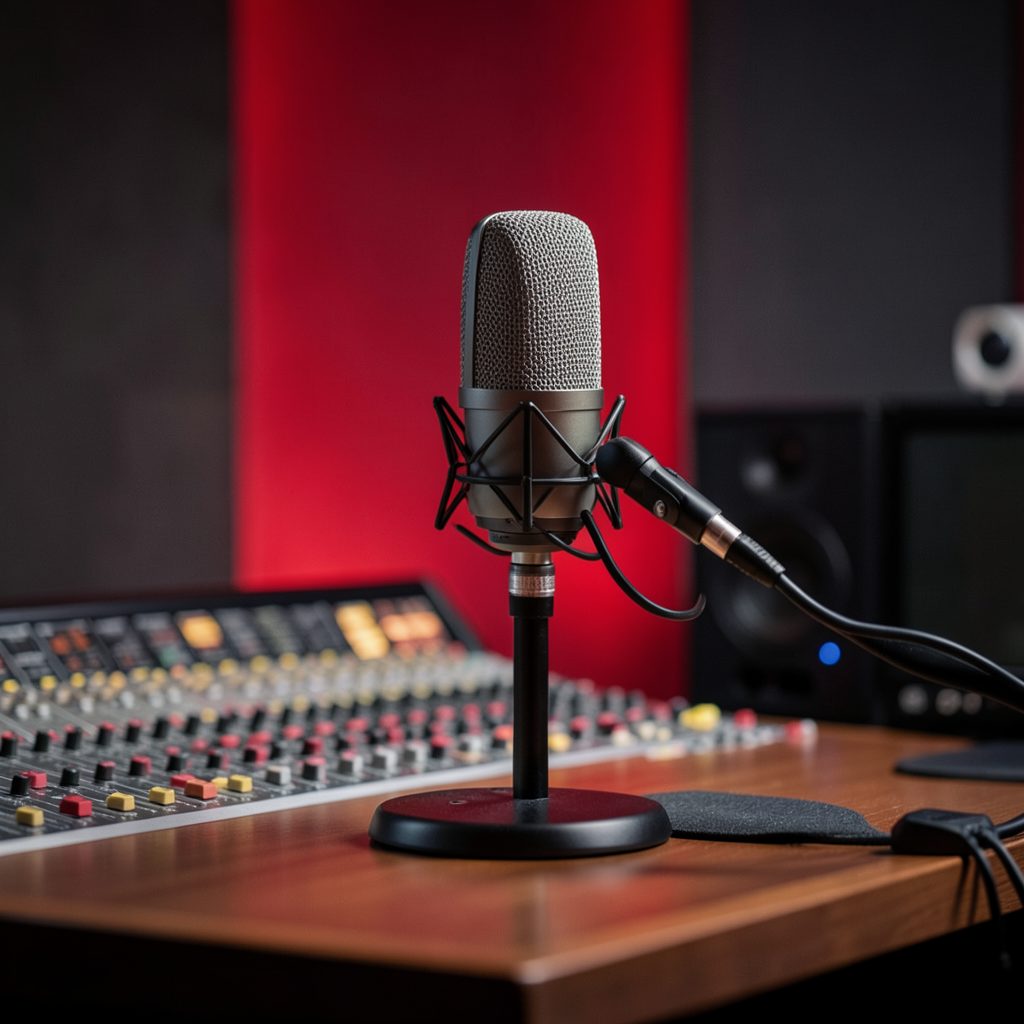
On Air & In Print
Andrea anchors the ITV lunchtime talk show Loose Women, which she joined in 2007, following 11 years as a core presenter on ITV's breakfast programme GMTV, a role she left on New Year's Eve 2008.
Alongside broadcasting, she has written for Red, Best, Scottish Woman and numerous weekly women's titles since starting as a freelance travel writer in 1993.
See Press & MediaReach & Recognition
A snapshot of the audience and impact behind Andrea's television, publishing and brand work.
This Girl Is On Fire
Andrea is CEO and Co-founder of the female empowerment platform This Girl Is On Fire, built around a mission to help women live, learn and thrive in a life they love.
Explore the PlatformScreen & Studio
Promotional and broadcast work created for television and corporate partners, including Barclaycard, Vistaprint and Wii Fit U.

Explore the Site
Find out more about Andrea's career, writing, media coverage and audience reach.
Get In Touch
For media, corporate or general enquiries, use the form below or reach out directly.
Contact details published on this site have appeared as +44 (0)20 7371 5444 / angharad.marsh@officialandreamclean.com and, on an earlier page, 020 7482 3282 / admin@officialandreamclean.com — please treat both as points of contact.