What Live Television Taught Me About Handling Unexpected Technical Glitches
Live television has a peculiar way of making time feel both enormous and impossibly fast. A producer may be counting down in my earpiece while a camera freezes, a microphone disappears, or a carefully prepared video refuses to play. Viewers see only a few seconds, yet those seconds can feel like a full production meeting taking place in public.
Over years in broadcasting, I learned that a technical problem is rarely just a technical problem. It tests communication, judgement, emotional control and trust. The equipment matters, of course, but the presenter’s response often determines whether the audience experiences a minor interruption or a full-blown crisis.
That lesson travels well beyond a television studio. It applies to a conference in Melbourne, a streamed panel in Brisbane, a charity event in Perth or a corporate presentation with people joining from different time zones. Live work rewards preparation, but it also asks us to stay present when preparation meets reality.
The Silence Is Louder Than The Fault
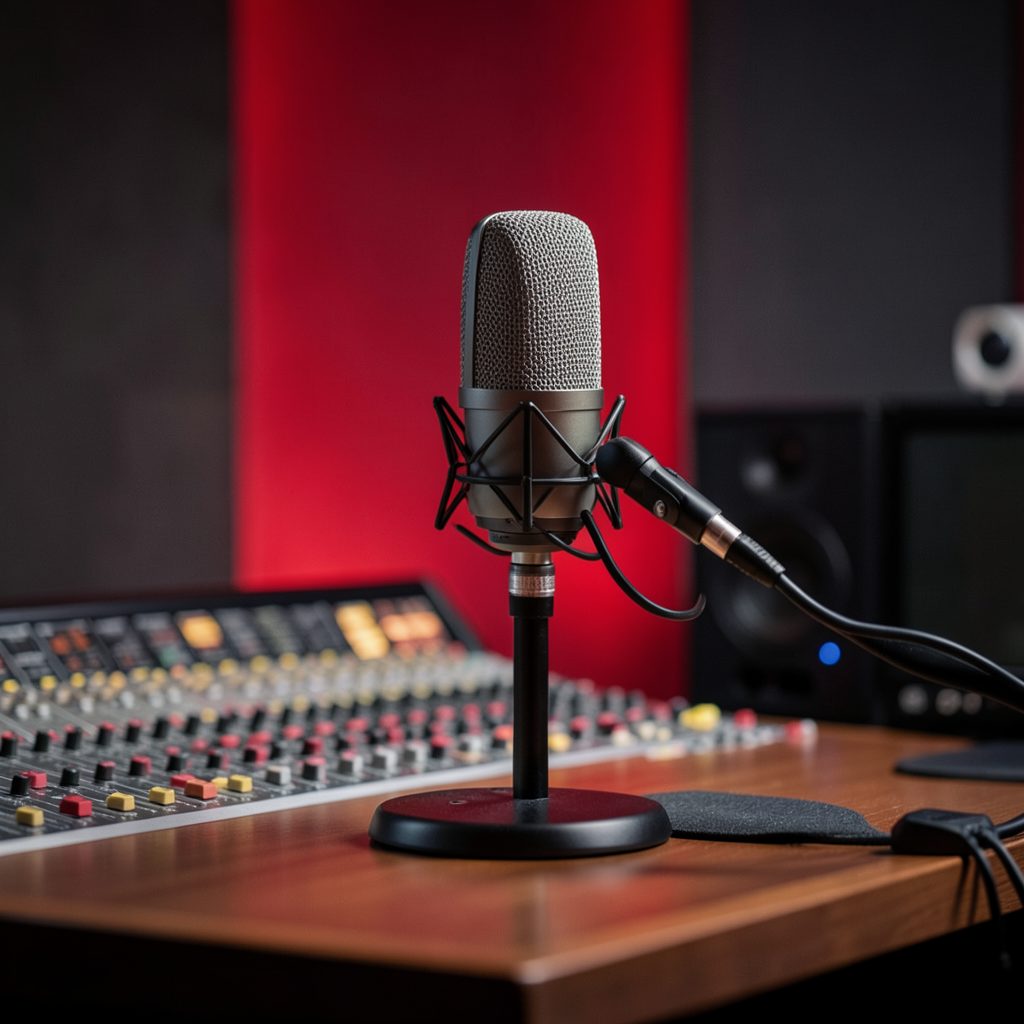
One of the strangest things about a live broadcast is how noticeable silence becomes. A dropped audio feed can make a presenter suddenly aware of every movement: the shuffle of papers, the hum of the studio, even the breath between words. The instinct is to fill the gap immediately, often with too many words and too much panic.
I discovered that the first useful response is to pause, breathe and assess. Is the audience able to hear me? Can the gallery still hear me? Has the camera changed? Is someone in the control room signalling that the issue will be fixed in seconds? A calm pause gives the crew space to work and gives the presenter a chance to choose a sensible next step.
There is also a practical benefit to having a few reliable personal references close at hand. I keep certain objects, routines and reminders that help me reset before going live; some of those small anchors appear among my favourite things. They may seem unrelated to broadcast engineering, yet steadiness often begins with the simple rituals that settle the nervous system.
Audiences Notice How You Recover
Viewers do not expect perfection from live television. They expect honesty, clarity and a sense that someone is still looking after the programme. When a guest’s microphone fails, I would rather acknowledge the issue plainly than pretend everything is working while speaking into silence.
A light touch can help, provided it does not make the person affected feel embarrassed. Saying, “We seem to have lost your audio for a moment; we’ll come straight back to you,” is useful. Blaming the guest, the technician or the venue is not. The audience can tolerate a glitch much more readily than they can tolerate confusion or defensiveness.
The same principle applies to visual faults. A frozen graphic or wrong background can be distracting, particularly when a production includes branded material, audience interaction or online elements. Even gaming wallpaper ideas can demonstrate how quickly a strong image draws attention; during a broadcast, an unexpected image may become the story unless the presenter calmly redirects focus.
Preparation Needs A Flexible Shape
Preparation for live television is not about writing a script so complete that nothing can vary. It is about knowing the purpose of each segment well enough to continue when the planned route disappears. I want to understand the key message, the guest’s strongest points, the timing, the likely transitions and the material we can safely drop.
A technical rehearsal should cover more than whether the lights switch on. It should test microphones, camera changes, remote contributors, autocue, playback, captions, internet connections and backup files. In Australia, a programme may be coordinating contributors from Sydney, Adelaide and regional areas while working to Australian Eastern Standard Time. A storm affecting a satellite link in Queensland can alter the running order in a London-based production almost instantly.
I also like to know the fallback version of every important segment. If a film will not play, can I summarise it? If a guest cannot connect, can I move to a studio interview? If the autocue fails, are the key facts available on a printed card? Preparation creates options, rather than creating an illusion of control.
A Glitch Is A Team Exercise
The presenter is visible, but live broadcasting is a collective effort. The gallery, floor manager, sound team, camera operators, lighting crew, researchers and producers may all be responding to the same fault from different positions. A presenter who tries to solve everything verbally can make the situation harder for the people fixing it.
Clear, brief communication is invaluable. I need to listen to the producer, repeat only what matters and avoid speaking over instructions. If the floor manager signals that we are returning to camera two, I should not launch into a new explanation at the same moment. Technical resilience depends on shared information and mutual trust.
| Glitch | Immediate response | Audience-facing language | Backup move |
|---|---|---|---|
| Microphone failure | Check the spare or move to a working source | “We’re reconnecting the audio now.” | Continue with a short link or return to the host |
| Frozen video | Wait for direction before repeating playback | “That clip is taking a moment to load.” | Summarise the segment or interview the guest |
| Autocue outage | Slow down and use agreed prompts | “We’ll take this from the notes.” | Move to key points and conversational delivery |
| Remote guest drop-out | Confirm whether reconnection is possible | “We’ll bring them back shortly.” | Shift to another item or use a prepared question |
| Incorrect graphic | Avoid drawing unnecessary attention to it | “Let’s go back to the main story.” | Ask production to remove it and continue verbally |
These moments can reveal the culture of a production. A good team does not waste time looking for someone to blame while the programme is on air. It solves the immediate problem, reviews what happened afterwards and improves the process. That approach works just as well at a live event, where a host may need to coordinate with venue staff, interpreters, AV technicians and speakers in front of a room full of people.
Local Context Changes The Pressure
Australia has its own rhythm of live broadcasting. Breakfast television can be discussing traffic in Sydney, a cyclone near Cairns and a football result from Melbourne within the same hour. Viewers are used to quick transitions, regional updates and presenters who can move between serious information and everyday conversation without sounding rattled.
The geography adds another layer. A remote guest in Darwin, Perth or Hobart may be dealing with a different local time, unstable weather or a connection that has travelled a long way before reaching the studio. A technical rehearsal scheduled for convenient Sydney office hours may be less convenient for a contributor in Western Australia. Building in time-zone checks and a proper connection test is basic courtesy as well as good production practice.
Language matters too. Australian audiences tend to respond well to direct, grounded phrasing. “We’re having a small technical issue and we’ll be back with you in a moment” feels more reassuring than a long explanation filled with industry terminology. A calm “no worries” attitude is useful, but it should never become an excuse for inadequate preparation or for dismissing an issue that affects accessibility.
Staying Human When The Plan Breaks
A glitch can make a presenter retreat into performance mode. We focus so hard on appearing polished that we stop connecting with the people in front of us. Yet the audience is usually more forgiving when they see a real person managing an imperfect moment with care.
When I host an event, I try to keep the room involved without turning the disruption into a spectacle. That may mean acknowledging the pause, thanking people for their patience and giving the crew the time they need. In a corporate setting, I might invite the audience to settle back while the next speaker is brought online. The words are simple, but they preserve dignity and momentum.
My experience of hosting live events reinforced how much human connection matters. People remember whether they felt respected during an awkward pause. They remember whether the host made space for a nervous speaker, whether the audience was kept informed and whether the atmosphere remained generous rather than tense.
That lesson is particularly important for women speaking in public. Many women are taught to apologise quickly, smooth everything over and take responsibility for problems they did not create. A technical failure is not a personal failure. The most professional response is to remain composed, communicate clearly and let the right people do their jobs.
The Recovery Is A Leadership Skill
Handling a live fault requires decisions with incomplete information. Should we wait? Should we move on? Should I speak to camera, bring in a co-host or use a prepared question? There may be no perfect answer, only the best available choice in that moment.
This is where leadership becomes visible. A leader does not need to know every technical detail, but they do need to create calm, prioritise the audience’s experience and help the team focus. On a panel or stage, that might mean protecting a speaker from awkward silence. In a television studio, it might mean taking a clean link while the gallery resets the next segment.
I have also learned that skills can be strengthened deliberately. Resources such as practical skill guidance can encourage people to identify what they already do well and where they need more confidence. Listening, summarising, improvising and reading a room are genuine professional skills, even when they do not appear on a technical checklist.
Confidence is not the absence of nerves. It is the ability to keep making useful decisions while nerves are present. The more often I practise handling small disruptions, the less likely I am to treat a larger one as a catastrophe. Rehearsing a graceful recovery is just as worthwhile as rehearsing an opening line.
What I Carry Into Every Broadcast
I now prepare for live work with two mindsets at once. The first is precise: check the equipment, confirm the timings, understand the running order and know who is responsible for each decision. The second is flexible: expect change, leave room for human behaviour and stay ready to abandon the plan when the audience needs something different.
Before going on air, I remind myself that the programme is a conversation, even when thousands or millions of people are watching. If a camera fails, I can still communicate. If a guest drops out, I can still create value. If the timing shifts, I can still make the next moment feel intentional.
The most useful broadcast training is often found in the seconds nobody planned. A failed link can teach patience. A silent microphone can teach restraint. A wrong graphic can teach focus. A disrupted live interview can teach empathy. Those lessons continue to shape the way I approach television, public speaking and every room in which people have gathered to listen.
Selected video moments capture the polished side of that work, but the real craft also lives in the recovery: the breath before responding, the trust placed in the team and the decision to keep the audience at the centre. Live television taught me that control is valuable, but composure, curiosity and connection are what carry a broadcast through the unexpected.
On Air & In Print
Andrea anchors the ITV lunchtime talk show Loose Women, which she joined in 2007, following 11 years as a core presenter on ITV's breakfast programme GMTV, a role she left on New Year's Eve 2008.
Alongside broadcasting, she has written for Red, Best, Scottish Woman and numerous weekly women's titles since starting as a freelance travel writer in 1993.
See Press & MediaReach & Recognition
A snapshot of the audience and impact behind Andrea's television, publishing and brand work.
This Girl Is On Fire
Andrea is CEO and Co-founder of the female empowerment platform This Girl Is On Fire, built around a mission to help women live, learn and thrive in a life they love.
Explore the PlatformScreen & Studio
Promotional and broadcast work created for television and corporate partners, including Barclaycard, Vistaprint and Wii Fit U.

Explore the Site
Find out more about Andrea's career, writing, media coverage and audience reach.
Get In Touch
For media, corporate or general enquiries, use the form below or reach out directly.
Contact details published on this site have appeared as +44 (0)20 7371 5444 / angharad.marsh@officialandreamclean.com and, on an earlier page, 020 7482 3282 / admin@officialandreamclean.com — please treat both as points of contact.