What losing a live signal taught me about resilience
There is a particular kind of silence that fills a studio when the live signal disappears. It is not the quiet of anticipation before a guest speaks, nor the hush of a sensitive interview. It is the hollow sound of connection being severed, of a moment that was supposed to belong to thousands becoming suddenly and entirely your own. I have stood in that silence more than once during my broadcasting career, and each time it has offered me a masterclass in what resilience truly means.
Live television is the most honest mirror of a working life. There are no edits, no second takes, no quietly excised breaths. Every pause is broadcast, every stumble immortalised. The moment a signal drops, the machinery that usually hides human fallibility is suddenly, brutally exposed. You discover in an instant how fragile the scaffolding is, and how much of what looks like confidence is really just structure built around you.
What I have learned, time and again, is that resilience is not the absence of panic. It is the willingness to keep speaking, keep listening, keep breathing, even when the screen has gone blank and the producer is frantically waving from the gallery. These are lessons that reach far beyond the studio floor, into boardrooms, family kitchens, and the everyday challenges that ask us to keep going when the picture cuts out.
The day the signal vanished
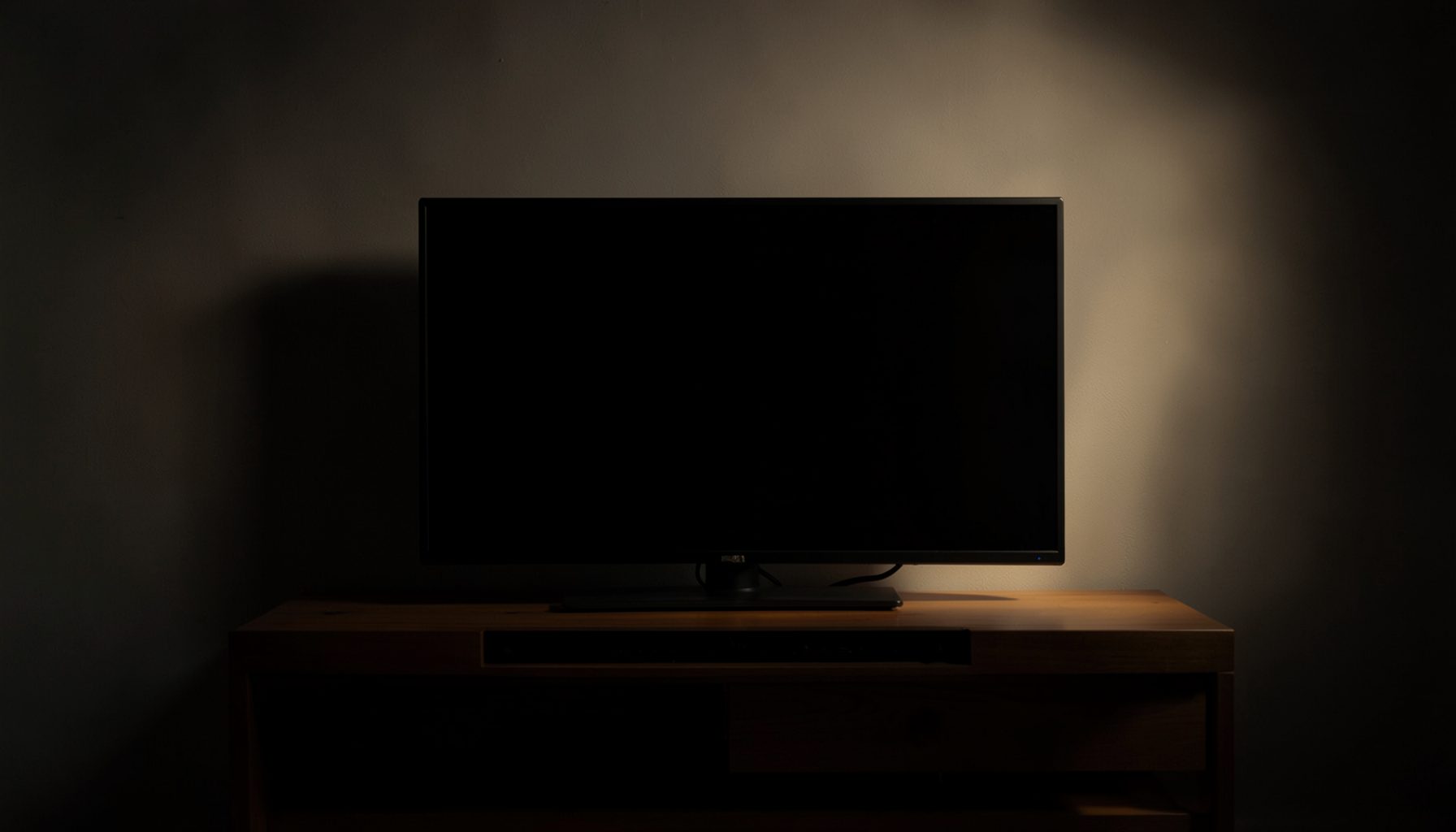
I remember one particular morning very clearly. We were crossing live to a correspondent in Melbourne, the producer counting us in with the familiar three-finger countdown, the studio lights warm against my shoulder. The correspondent smiled, opened his mouth, and then the picture froze. Then it fragmented. Then it disappeared entirely. For roughly forty seconds, I was on my own with a national audience, no guest, no script, and the gentle hiss of dead air in my earpiece.
Those forty seconds felt like forty minutes. I have thought about them often since, and what strikes me now is how ordinary they actually were. There was no dramatic collapse, no fire alarm, no medical emergency. The technology simply stopped working, as it sometimes does, and the only thing that mattered in that moment was how I chose to behave. I asked a thoughtful question of the audience, invited them to share their own experiences, and waited calmly for the feed to be restored.
The strange thing about a lost signal is that it forces you back into the most basic form of communication. Strip away the autocue, the graphics, the carefully timed packages, and you are left with a person talking honestly to other people. That vulnerability, I have come to believe, is the real foundation of broadcast resilience.
Preparation meets improvisation
Years of live broadcasting teach you a strange paradox. You prepare meticulously, and then you must be ready to abandon every preparation in an instant. A producer once told me that the most dangerous moments on air are the ones where you believe nothing can go wrong, and she was right. The moment you feel entirely safe is the moment the universe tends to disagree.
For Australian audiences especially, this duality is familiar. A live cross from a coastal vantage point near Sydney Harbour can look breathtaking on camera and yet be a nightmare for technicians fighting salt spray, wind, and patchy mobile reception. Sports broadcasts from the Melbourne Cricket Ground or live crosses during the AFL Grand Final depend on a web of satellites, fibre links, and microwave relays that can fail at any one of dozens of points. Knowing this does not make the failure easier, but it does make it expected, and expectation is the soil in which composure grows. You can see some of these recoveries captured in real broadcasts on my videos page.
What I have learned is that preparation is not about scripting every word. It is about understanding the shape of the programme so deeply that, even when the structure collapses, you can rebuild it from memory. It is the difference between memorising a route and actually knowing the city.
Live versus recorded: a comparison
| Aspect | Live broadcast | Recorded broadcast |
|---|---|---|
| Response to signal loss | Immediate improvisation required | Pause, diagnose, reshoot |
| Audience perception | High stakes, authentic feel | Polished, controlled image |
| Pressure on presenter | Peak, visible to all | Lower, edits can hide errors |
| Recovery options | Few, often only continued talk | Many, including retakes and reshoots |
| Long-term lesson | Builds deep resilience | Builds technical perfection |
The differences in this comparison have shaped how I approach every interview, every event, and every live appearance. Live television is unforgiving in a way that recorded work simply is not. Yet it is also the training ground that teaches the kind of resilience you cannot learn from a script.
Composure under the lights
Composure is a muscle. It is built in small repetitions, in moments of minor failure that feel enormous at the time, and in the slow accumulation of evidence that you can, in fact, survive the worst thing your imagination has conjured. When the signal drops, the temptation is to fill the air with noise, with apologies, with explanations. Often the most powerful thing you can do is the opposite.
A producer I worked with once told me a story about a regional newsreader in Adelaide who, during a major technical failure, simply sat in comfortable silence for nearly a minute, looked thoughtfully at the camera, and when the feed returned said warmly, "Welcome back, wherever you've been." It became a small legend in Australian newsrooms, a reminder that audiences are far more forgiving than we imagine, and far more perceptive when we are not.
The same principle applies off air. In the middle of a difficult conversation, a family crisis, or a professional setback, the people around you are rarely looking for perfection. They are looking for steadiness. The signal will return, and when it does, what matters most is the quality of presence you have maintained while it was gone. For me, that steadiness is often fuelled by small, deliberate anchors, and you can find a few of my favourite things that help me find calm in the chaos.
Rebuilding after a broadcast blunder
Resilience is not finished when the crisis ends. It is only beginning. The minutes and hours after a signal failure are where the real learning happens, because they reveal what kind of professional you want to be when the next moment arrives. I have made it a habit, after every live broadcast, to spend a few quiet minutes noting what worked and what did not, not as a form of self-criticism but as a kind of personal audit.
A few habits have emerged from that practice over the years:
- Writing down three things that went well, even on the hardest days.
- Asking one trusted colleague for honest, specific feedback.
- Identifying a single practical change for the next live appearance.
- Giving yourself permission to feel the adrenaline afterwards, without judgement.
These small rituals are how resilience becomes a practice rather than a personality trait. They are also how a momentary failure becomes the seed of the next success.
Resilience lessons from Australian studios
Working with Australian production teams, from the bustling network headquarters in Sydney to regional stations serving communities around Perth and Brisbane, has taught me that resilience looks different in different latitudes. The vast distances, the sometimes unpredictable weather, and the sheer scale of the country mean that Australian broadcasters have developed a particularly practical, no-drama approach to technical failure.
Australian audiences, too, have a way of putting presenters at ease. There is a cultural preference for understatement, for dry humour, for the kind of warmth that does not need to announce itself. When a live cross fails during a summer thunderstorm over the Brisbane River, or when a Sydney New Year's Eve broadcast hits an unexpected glitch, the response from viewers is rarely outrage. It is more often a wry comment about the weather, a quick laugh, and a readiness to carry on. That collective grace is a powerful ally for any broadcaster learning to be resilient.
It also helps that the Australian television industry has long embraced the philosophy that the show must go on. From the earliest days of the ABC to the modern commercial networks, live television has been treated as a craft, not a product, and craft is built through recovery as much as through triumph.
Bringing the lessons into everyday life
The lessons from a lost signal travel surprisingly well. The next time you face a moment where the picture cuts out, where the plan falls apart, where the technology, the meeting, or the conversation simply stops working, I hope you will remember that resilience is not about pretending nothing has happened. It is about staying present long enough to find the next honest thing to say.
A few everyday principles that travel from the studio to life:
- Pause before reacting, even when the silence feels unbearable.
- Speak to the human being in front of you, not to the situation.
- Treat every failure as data, not as a verdict on your worth.
- Trust that the audience, whoever they are, wants you to succeed.
If you would like to explore more of my work and the projects that shape my thinking, the main site brings everything together in one place. Resilience, in the end, is not a single grand gesture. It is the quiet accumulation of moments when you chose to keep going, even when the screen went dark. The signal always returns. The question is who you will be when it does.
On Air & In Print
Andrea anchors the ITV lunchtime talk show Loose Women, which she joined in 2007, following 11 years as a core presenter on ITV's breakfast programme GMTV, a role she left on New Year's Eve 2008.
Alongside broadcasting, she has written for Red, Best, Scottish Woman and numerous weekly women's titles since starting as a freelance travel writer in 1993.
See Press & MediaReach & Recognition
A snapshot of the audience and impact behind Andrea's television, publishing and brand work.
This Girl Is On Fire
Andrea is CEO and Co-founder of the female empowerment platform This Girl Is On Fire, built around a mission to help women live, learn and thrive in a life they love.
Explore the PlatformScreen & Studio
Promotional and broadcast work created for television and corporate partners, including Barclaycard, Vistaprint and Wii Fit U.

Explore the Site
Find out more about Andrea's career, writing, media coverage and audience reach.
Get In Touch
For media, corporate or general enquiries, use the form below or reach out directly.
Contact details published on this site have appeared as +44 (0)20 7371 5444 / angharad.marsh@officialandreamclean.com and, on an earlier page, 020 7482 3282 / admin@officialandreamclean.com — please treat both as points of contact.