What Radio Taught Me About Truly Listening
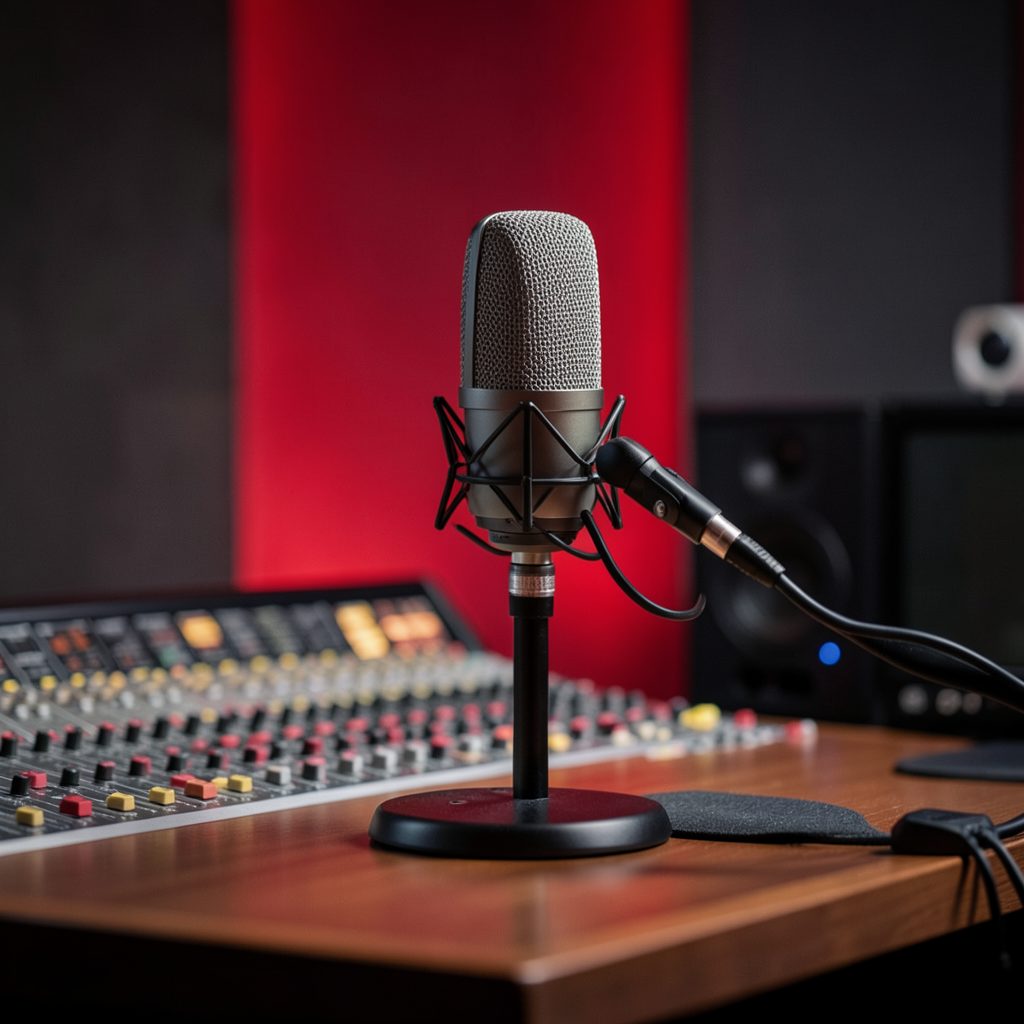
Before I became a familiar face on television, I learned my craft in local radio. The studio was modest, the hours were often unsociable, and there was no room for hiding behind a polished image. A microphone gives you nowhere to go except towards the person speaking. It taught me that broadcasting is less about filling airtime and more about making someone feel heard.
Hosting a radio show also changed the way I understand communication. Listening is often treated as a quiet, passive activity, while speaking is given the status of a skill. In reality, attentive listening takes concentration, curiosity, emotional intelligence and discipline. It asks us to notice the words, the pauses, the changes in tone and the meaning underneath the sentence.
Those early experiences continue to shape my work as a broadcaster, author, speaker and advocate for women’s wellbeing. Whether I am on a stage, in a studio or having a private conversation, I carry the same principle with me: people rarely need us to have the perfect response immediately. They need to know that we are present.
The Studio Taught Me To Pay Attention
Radio rewards preparation, but it quickly exposes anyone who is relying on a script alone. A presenter may have a running order, research notes and carefully planned questions, yet the most meaningful part of an interview can emerge in an unexpected answer. If you are too focused on reaching the next item, you miss the moment that gives the conversation its value.
I learned to listen for the detail that carried emotion. Someone might describe a difficult experience in a calm voice, then pause before one particular word. A guest who seemed confident might become quieter when discussing family, identity or failure. Those changes were signals. They did not always require an immediate follow-up question, but they did require recognition.
That kind of attention is useful far beyond broadcasting. In a workplace, a team member may say they are managing while their pace, energy or choice of words suggests otherwise. At home, someone may tell us about their day without directly saying that they are overwhelmed. Active listening means staying open long enough to notice what is being communicated, rather than waiting for our opportunity to speak.
A Voice Carries More Than Words
One of radio’s great lessons is that the voice contains information that a transcript cannot fully capture. Warmth, hesitation, humour and strain can all be heard. When the audience cannot see a person’s expression or body language, the sound of their voice becomes a form of emotional context.
This made me more sensitive to the difference between hearing and understanding. Hearing is receiving sound. Understanding involves interpreting the person’s meaning without rushing to impose our own. That distinction matters when someone is talking about something personal. The listener’s role is not to turn every experience into a lesson, comparison or story about themselves.
Early local radio also gave me a grounding in the value of ordinary stories. Not every guest was famous. Many were people whose expertise came from lived experience: a carer, a volunteer, a parent, a campaigner or someone rebuilding their life after a setback. Their stories reminded me that a compelling voice does not need a title or a large platform. Respectful attention can give everyday experiences the space they deserve.
I have written about the perspective I gained from those beginnings in my reflections on early radio lessons. The details of local broadcasting remain important to me because they shaped a belief that has stayed constant throughout my career: connection starts when we stop assuming that we already know what another person means.
Silence Is Part Of The Conversation
In live broadcasting, silence can feel alarming. There is a temptation to fill every gap with another question, a joke or a piece of information. With experience, I began to understand that a pause is not necessarily a problem. It may be the moment when a guest gathers their thoughts or decides whether they feel safe enough to say what they really mean.
Allowing silence requires confidence. The presenter has to resist the urge to rescue the conversation and trust that a thoughtful answer may be forming. In a personal or professional setting, this can be just as powerful. A pause gives people room to process emotion instead of rewarding the fastest response.
There is a difference between comfortable silence and disengagement. Listening does not mean becoming blank or distant. It means remaining attentive without controlling the pace. A nod, a calm expression, or a simple acknowledgement can show that the other person still has your attention. Often, this quiet encouragement leads to a more honest conversation than a series of rapid-fire questions.
Listening And Leading In Real Time
Radio taught me to make decisions quickly while remaining emotionally available. A presenter may need to move the programme along, handle unexpected information and keep an audience engaged, all while responding to the person in front of them. That balance is valuable in leadership, where clarity and compassion have to exist together.
Good leadership listening is not the same as agreeing with everything that is said. It means making space for information before deciding what to do with it. A leader who listens carefully can identify concerns earlier, understand how decisions are landing and recognise strengths that might otherwise be overlooked. People are more likely to contribute honestly when they believe their observations will be taken seriously.
| Listening habit | What it creates | How it can appear in practice |
|---|---|---|
| Staying with the speaker | Trust and openness | Letting someone finish before responding |
| Noticing tone and pauses | Emotional awareness | Checking in when words and delivery do not match |
| Asking a clear follow-up | Better understanding | Exploring a detail instead of making an assumption |
| Reflecting back the message | Shared clarity | Summarising what you have heard |
| Accepting a different viewpoint | Stronger relationships | Being curious without becoming defensive |
On air, I could never predict exactly where a conversation would go. That uncertainty encouraged me to remain responsive rather than rigid. In business, events and team environments, the same approach helps people feel that the conversation is genuine. A prepared agenda may provide direction, but attentive listening allows the discussion to respond to what is actually happening.
The Difference Between Curiosity And Interruption
A good question can open a door. A poorly timed question can close it. Radio taught me to distinguish between asking because I am genuinely curious and asking because I want to demonstrate knowledge, steer the answer or hurry towards a particular point.
Curiosity begins with humility. It accepts that another person’s experience cannot be fully understood from a headline or a first impression. Open questions invite detail, while leading questions often suggest the answer we want. The most useful follow-ups are usually simple: “What was that like for you?” “What changed?” or “What do you wish people understood?”
Listening also involves resisting the urge to compare. When someone shares a difficult experience, it can be tempting to respond with a similar story from our own lives. Sometimes that creates connection, but it can also shift attention away from them. Before sharing, I try to ask myself whether my experience will support the person or quietly take over the conversation.
This is especially important when speaking about women’s health, confidence and personal growth. People can feel pressured to present a neat version of their lives, even when the reality is complicated. A listening space should allow for uncertainty, anger, humour, grief and hope. We do not have to tidy someone’s story before we have heard it.
Bringing Presence To Every Conversation
My career has taken me from local radio to television, writing, advocacy and public speaking, but the foundation remains the same. My professional journey has been shaped by conversations with people from many different backgrounds, and each setting has reinforced the importance of meeting people with attention rather than assumption.
On a stage, listening affects the way a speaker responds to an audience. At an event, it changes how a host introduces a guest and handles an unexpected moment. In a workplace, it can determine whether an employee feels valued. In a friendship, it may be the difference between someone feeling supported and feeling dismissed.
Presence is a practical skill, not an abstract quality. It can mean putting a phone away, making eye contact, remembering a detail from a previous conversation or giving someone enough time to find their words. Small actions communicate respect. They tell people that they are not competing with notifications, deadlines or our own internal monologue.
The following habits have helped me make listening more deliberate in busy environments:
Practices That Make Listening Visible
Listening becomes more credible when it can be seen in our behaviour. It is easy to say that we value open communication, but people judge that value through everyday interactions: whether we interrupt, whether we remember what was shared and whether our actions reflect what we heard.
These simple practices can support stronger conversations at work, at home and on any platform where people are invited to speak:
- Put aside distractions so the speaker receives your full attention.
- Let a person complete their thought before preparing your reply.
- Ask one thoughtful follow-up question instead of several rushed ones.
- Reflect back the key point to check that you have understood it accurately.
- Notice tone, pace and pauses without treating them as proof of what someone feels.
None of these habits requires a studio, a broadcast licence or a formal communication strategy. They require patience. Listening well can feel slower than speaking, particularly when schedules are crowded, but it often saves time by preventing misunderstanding and helping people address the real issue sooner.
What A Microphone Cannot Teach You Alone
Radio gave me the conditions to practise listening, but the deeper lessons came from people. Every guest brought a different rhythm, history and way of making sense of the world. Some spoke quickly because they were nervous. Others needed time. Some found confidence as the conversation progressed. My responsibility was to create enough safety for them to be themselves.
That responsibility remains at the heart of meaningful communication. A microphone can amplify a voice, but it cannot create trust by itself. Trust grows through preparation, respect and a willingness to hear something we did not expect. It grows when we understand that the person speaking is more important than the performance of the interviewer.
Listening has also taught me something about resilience. When people are given room to describe what they have survived, they often discover their own strength in the telling. They may arrive believing that their story is too ordinary, too messy or too late to matter. Careful attention can help them see its value without forcing it into a polished narrative.
That is why listening matters in conversations about leadership and empowerment. People do not always need someone to speak on their behalf. Sometimes they need support while they find their own voice. The best hosts, leaders and allies know when to guide, when to challenge and when to step back.
If you are planning a conference, team event or conversation about resilience, leadership or women’s wellbeing, bring listening into the centre of it. Create space for honest voices, ask questions that invite depth and allow pauses to do their work. A stronger conversation begins when everyone in the room understands that being heard is part of being valued.
On Air & In Print
Andrea anchors the ITV lunchtime talk show Loose Women, which she joined in 2007, following 11 years as a core presenter on ITV's breakfast programme GMTV, a role she left on New Year's Eve 2008.
Alongside broadcasting, she has written for Red, Best, Scottish Woman and numerous weekly women's titles since starting as a freelance travel writer in 1993.
See Press & MediaReach & Recognition
A snapshot of the audience and impact behind Andrea's television, publishing and brand work.
This Girl Is On Fire
Andrea is CEO and Co-founder of the female empowerment platform This Girl Is On Fire, built around a mission to help women live, learn and thrive in a life they love.
Explore the PlatformScreen & Studio
Promotional and broadcast work created for television and corporate partners, including Barclaycard, Vistaprint and Wii Fit U.


Explore the Site
Find out more about Andrea's career, writing, media coverage and audience reach.
Get In Touch
For media, corporate or general enquiries, use the form below or reach out directly.
Contact details published on this site have appeared as +44 (0)20 7371 5444 / angharad.marsh@officialandreamclean.com and, on an earlier page, 020 7482 3282 / admin@officialandreamclean.com — please treat both as points of contact.