What live phone-ins taught me about human connection
The first time I sat behind the microphone for a live call-in segment, my hands were trembling beneath the desk where no one could see them. A woman from regional New South Wales was on the line, asking about something deeply personal, and the studio lights felt like a small sun aimed directly at my face. Within ninety seconds, she had told me more than some friends tell each other in years. That moment shaped how I understand spontaneous exchange forever, and it is the same instinct I bring to conversations with audiences from Brisbane boardrooms to Perth conference centres.
Live broadcasting strips away every careful edit, every rehearsed pause, every glossy filter. A caller might be laughing one moment and in tears the next, switching between topics without warning. The host has no script, no safety net, and no second take. What emerges in that gap between preparation and presence is something rare: an unfiltered encounter between two people who have never met, sharing a few breaths of honesty that feel entirely human.
The moment the red light goes on
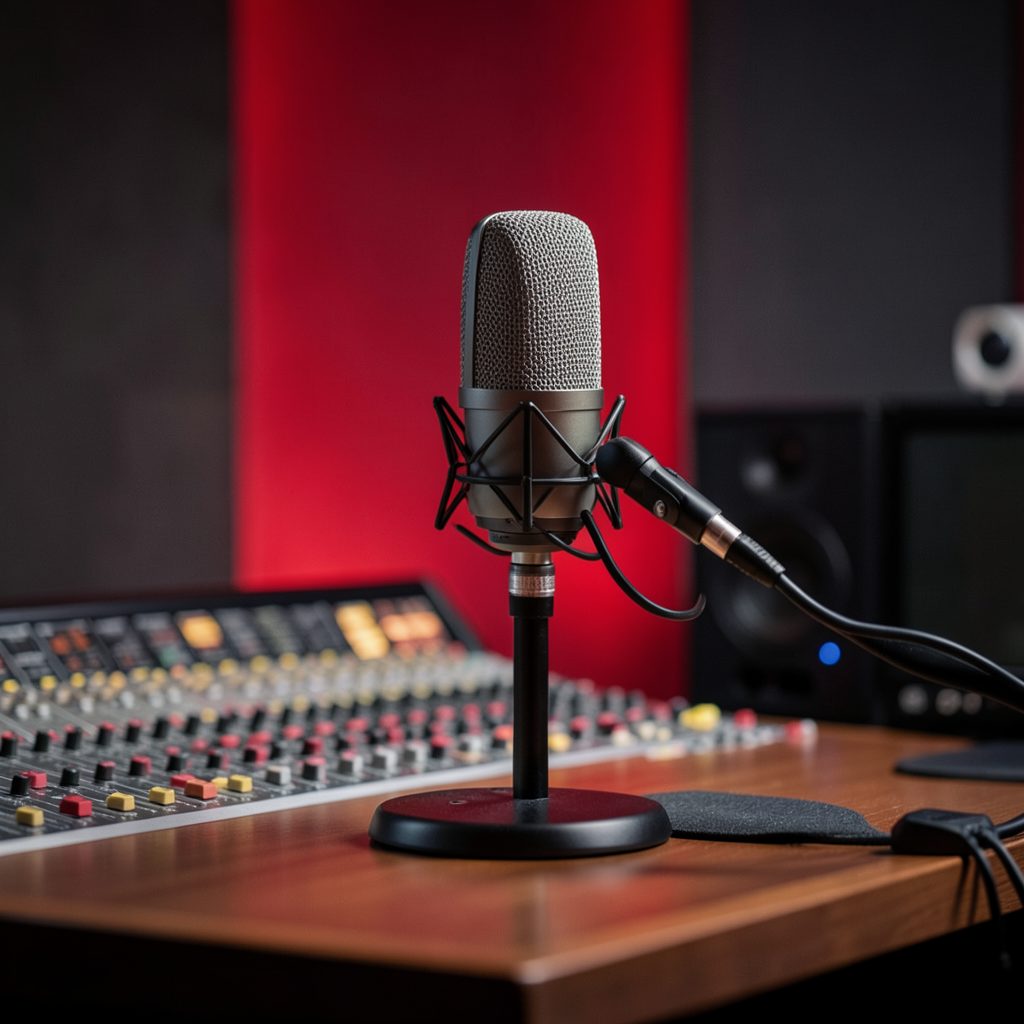
There is a particular hush in a radio studio when the on-air light glows red. The producer counts down with fingers, the jingle fades, and suddenly you are speaking to thousands of strangers you will never see. In Australia, where stations like ABC Radio Melbourne and commercial networks across Adelaide carry the morning routines of shift workers, parents and retirees, the reach of a single conversation can stretch across entire suburbs before breakfast is finished.
I learned very quickly that the audience knows when a host is performing and when a host is present. The listener can hear the difference between a polished segue and a genuine reaction to a story about a grandmother in Hobart caring for her grandchildren, or a farmer in the Wheatbelt adjusting to drought. The phone-in format forces you into the present tense because the next caller might say anything, and your response has to land in the same moment they speak it.
Australian broadcasting standards set by the ACMA require hosts to handle sensitive topics with care, but no rulebook can prepare you for the actual human being on the other end of the line. The regulations give you a framework, yet the real work happens in the small decisions: do you interrupt, do you let silence sit, do you offer a name or stay formal. Those choices are where connection is either built or quietly lost.
Why strangers pick up the phone to call a stranger
People rarely call a live show to ask simple questions. They call because something is weighing on them, and they need a witness. A woman in Cairns once rang in about her husband's redundancy and ended up describing a memory from her childhood in Geelong. The original question evaporated within seconds, replaced by a confession she had never shared with her own sister.
The phone-in is a curious ritual. You are asking someone to speak aloud to hundreds of thousands of unseen listeners, often about matters they have only ever discussed behind closed doors. Yet people do it, and they do it with remarkable candour. The format works because it offers something most conversations cannot: a captive, caring audience and a host whose only job in that moment is to listen well.
There is also a peculiar generosity in calling. The caller knows their story might help someone else listening alone in a parked car in Parramatta or a kitchen in Fremantle. Sharing becomes a form of service, not exhibition. That shift in motivation changes the texture of the conversation entirely, turning a personal disclosure into a small act of community.
Listening as a craft, not a performance
Early in my broadcasting career, I thought hosting was about asking the right questions. After a few thousand live calls, I realised the questions mattered far less than the quality of silence between them. Listening well means resisting the urge to fill every pause with reassurance, advice, or a tidy summary.
A caller from Townsville once described the slow grief of losing a parent to dementia, and what struck me was the way her voice changed when she reached the part where her mother stopped recognising her. I did not speak for almost thirty seconds. When I finally responded, I said only what she had already told me, simply reflected back. She thanked me at the end of the call and said it was the first time anyone had truly heard her.
In live radio, you develop what I can only describe as a muscle for attention. You learn to track the words, the breath behind the words, and the long pauses that often carry more weight than the sentences themselves. That skill transfers beautifully into corporate settings, where leaders often mistake nodding along for actually hearing what their teams are saying. The discipline of the studio teaches a more honest kind of presence, one that cannot be faked over time.
The courage it takes to speak into the void
Callers are brave. They dial a number, wait through music and advertisements, and when the light goes green they speak to a stranger about something tender. That act of faith deserves a host who can hold the space without grasping at it.
I have heard from women across Australia who rang in about midlife reinvention, about leaving marriages, about returning to study in their fifties, about caring for ageing parents while raising teenagers. The geographical spread is enormous, from Broome to Ballarat, and the emotional range is wider still. Each caller hands over a piece of themselves and trusts the host to treat it with respect rather than spectacle.
That trust is fragile. A clumsy response, an ill-timed joke, a piece of unsolicited advice, and the caller retreats. The audience hears it happen. They notice when a host fumbles and when one handles a delicate disclosure well. Building a reputation for that kind of careful stewardship takes years, and losing it can happen in a single segment. The stakes of spontaneous exchange are quietly enormous, even when the format feels casual.
When a call takes an unexpected turn
The calls you remember are rarely the ones you expected. I once took a call from a man in Darwin who wanted to discuss a celebrity feud and ended up opening up about his daughter's struggle with postnatal depression. He had used the trivia question as a doorway into something he could not name any other way.
Those pivots teach you that people are layered, and the surface topic is often a ticket into a deeper room. A good host follows the caller down the corridor rather than steering them back to the lobby. The conversation becomes richer, more honest, and more useful to the wider audience because it reveals something true about human experience rather than rehearsed opinion.
This is also why live phone-ins resist sanitisation. Producers can prepare talking points and pre-record interviews, but the moment a real voice comes through the line, anything can happen. That unpredictability is precisely what gives the format its power. It mirrors life itself, where grief and laughter sit at the same table and the next sentence can change everything.
Lessons from the studio that travel outside it
The patterns I learned in the studio have reshaped how I approach every room I enter, from a leadership summit in Sydney to a women's networking breakfast on the Gold Coast. The first lesson is that connection happens in the gaps, not in the prepared material. Audiences sense when a speaker is reciting and when a speaker is present.
The second lesson concerns pacing. In radio, you learn to let a story breathe. The same applies to a corporate keynote or a fireside chat. Rushing toward a conclusion signals that the speaker wants to be elsewhere, while patient pacing signals that the speaker values the people in front of them. Australian business culture, often direct and pragmatic, sometimes mistakes efficiency for effectiveness, yet the most memorable exchanges tend to unfold slowly.
The third lesson is about humility. A host who believes they have all the answers makes a dull show and a dull leader. The willingness to be changed by a conversation is what gives it weight. I have left studio sessions with my own assumptions rearranged, and I have left boardroom panels feeling similarly recalibrated. The best exchanges leave both parties a little different from how they began.
Building spontaneous connection into everyday community
Spontaneous exchange is not reserved for broadcasters. It belongs to anyone willing to listen well, respond honestly, and trust that ordinary conversations can carry extraordinary meaning. In my work with women's groups, I have seen the same alchemy happen at kitchen tables, walking groups along the Yarra, and online forums where members share stories they have never told elsewhere.
If you are building a circle of women around shared experience, whether it centres on midlife, career change, or simply mutual support, the principles remain the same. Create space for unfiltered voices, resist the temptation to steer every story toward a tidy moral, and remember that the listener matters as much as the speaker. The work of supportive women's groups requires the same patience and warmth that a good host brings to the studio.
There is something deeply restorative about being heard without being fixed. When someone rings a radio show, they rarely want a solution. They want a witness. That same gift, offered consistently in small ways, builds the kind of communities where people feel safe enough to bring their real selves. Launching a book during a personal crisis taught me how much we need those pockets of honest exchange, especially when life feels unsteady.
| Studio phone-in | Everyday conversation |
|---|---|
| Audience is invisible but real | Audience is one or a few people |
| Time pressure is constant | Time is usually flexible |
| Mistakes air publicly | Mistakes can be repaired quietly |
| Caller often shares a confession | Speaker usually shares a preference |
| Host must hold space for strangers | Listener often knows the speaker |
| Emotional range shifts in seconds | Emotional shifts unfold over minutes |
| Regulatory framework applies | Social norms apply |
| Connection feels rare and electric | Connection can become routine |
The studio will always feel like a sacred place to me. It taught me how to listen, how to be surprised, and how to value the small miracles of human exchange. Whatever work I do beyond broadcasting, whether writing, speaking, or hosting an event, I carry the studio with me. The discipline of spontaneous connection travels wherever honest conversation is needed, and in a country as generous and varied as Australia, that is almost everywhere.
On Air & In Print
Andrea anchors the ITV lunchtime talk show Loose Women, which she joined in 2007, following 11 years as a core presenter on ITV's breakfast programme GMTV, a role she left on New Year's Eve 2008.
Alongside broadcasting, she has written for Red, Best, Scottish Woman and numerous weekly women's titles since starting as a freelance travel writer in 1993.
See Press & MediaReach & Recognition
A snapshot of the audience and impact behind Andrea's television, publishing and brand work.
This Girl Is On Fire
Andrea is CEO and Co-founder of the female empowerment platform This Girl Is On Fire, built around a mission to help women live, learn and thrive in a life they love.
Explore the PlatformScreen & Studio
Promotional and broadcast work created for television and corporate partners, including Barclaycard, Vistaprint and Wii Fit U.

Explore the Site
Find out more about Andrea's career, writing, media coverage and audience reach.
Get In Touch
For media, corporate or general enquiries, use the form below or reach out directly.
Contact details published on this site have appeared as +44 (0)20 7371 5444 / angharad.marsh@officialandreamclean.com and, on an earlier page, 020 7482 3282 / admin@officialandreamclean.com — please treat both as points of contact.