A media kit that tells a story will outsell one that merely lists facts
Most media kits are glorified CVs dressed up in brand colours. They list podcast appearances, follower counts, and book sales in tidy bullet form, then wonder why producers and brands stop replying. The shift that changes everything is treating the kit as a narrative document, not a database dump. When a producer or PR lead opens your file, they are scanning for reasons to say yes, and a wall of figures rarely gives them that.
For Australian creators and experts pitching into a market as crowded as Sydney's breakfast television circuit or Melbourne's independent podcasting scene, the difference between landing a guest spot and being quietly archived often comes down to whether the kit makes the recipient feel something. A good document borrows the rhythm of a feature article: it sets a scene, raises a small tension, and offers your work as the resolution. Below is a quick comparison to set the scene before we dig into the craft.
| Element | A fact-listing kit | A story-driven kit |
|---|---|---|
| Opening line | Bio written in third person | A scene or moment that hooks |
| Statistics | Bulky stats with no framing | Select data points placed for impact |
| Photography | Generic corporate headshots | Images showing context and personality |
| Boilerplate | Paragraphs lifted from LinkedIn | Original narrative written for the reader |
| Closing pitch | A list of services | A clear next step framed around their needs |
Begin with the moment that made you
Every strong kit opens on a specific moment rather than a credential. Instead of "Award-winning broadcaster with twenty years of experience," try the line that actually explains why you do what you do. The reader, whether a Sydney-based commissioning editor or a Brisbane event booker, wants a window into the human behind the press, and a sharp opening sentence is the cleanest way to give them one.
A useful exercise is to write the opening paragraph of a profile about yourself in a publication you would be proud to read. Picture something you would be thrilled to see run in a glossy weekend magazine or a long-form newspaper lift-out. Aim for around seventy words. If you cannot find a moment that feels honest, sit with a friend who knows your work and ask them what they remember most about seeing you do it. Capture a moment, a place, a feeling, and the work you do in that context. The details that work best are sensory and specific: the hum of a studio at dawn, the look on a guest's face when a difficult question lands well, the page of a manuscript you read aloud for the first time. That paragraph becomes the soul of your kit, and everything else hangs from it.
The reason this works is borrowed from journalism itself. Producers and editors learn to scan for the lede, the single sentence that carries the whole story. When your kit behaves like editorial, the recipient instinctively treats you as editorial talent. They read on rather than skim past, and that extra minute of attention is often the moment a booking is born.
Shape the document as a narrative arc
Once the opening is set, the rest of the kit needs the same narrative instinct. Think of the classic three-act structure: setup, complication, resolution. In your case, the setup is your positioning, the complication is the problem you solve for audiences or brands, and the resolution is the evidence that you have solved it before. This is the spine a reader can follow even when they only spend ninety seconds with your file, and a clear spine survives a skim.
Australian audiences have a low tolerance for puffery, particularly in a culture that often rewards the tall poppy only to cut them down later. Earnest, self-aggrandising language will get your kit tossed before it is read twice. A grounded arc that says, "I noticed this gap, I built something to fill it, here is what happened next," reads as confidence rather than boast. That tone travels well in markets from Adelaide to Perth, and it reads as professional rather than self-conscious.
A neat trick is to mirror the way a quality publication frames its features. Magazines like Azaya Art Magazine lead with a subject, then a context, then a question the reader wants answered. Your kit can do the same: lead with you, set the industry context, then name the question your work answers for the brand or producer reading it. The structure feels familiar, which means it feels safe, which means it gets read. Once you have set that pattern, anything that interrupts it has to earn its place.
Choose imagery that reveals character
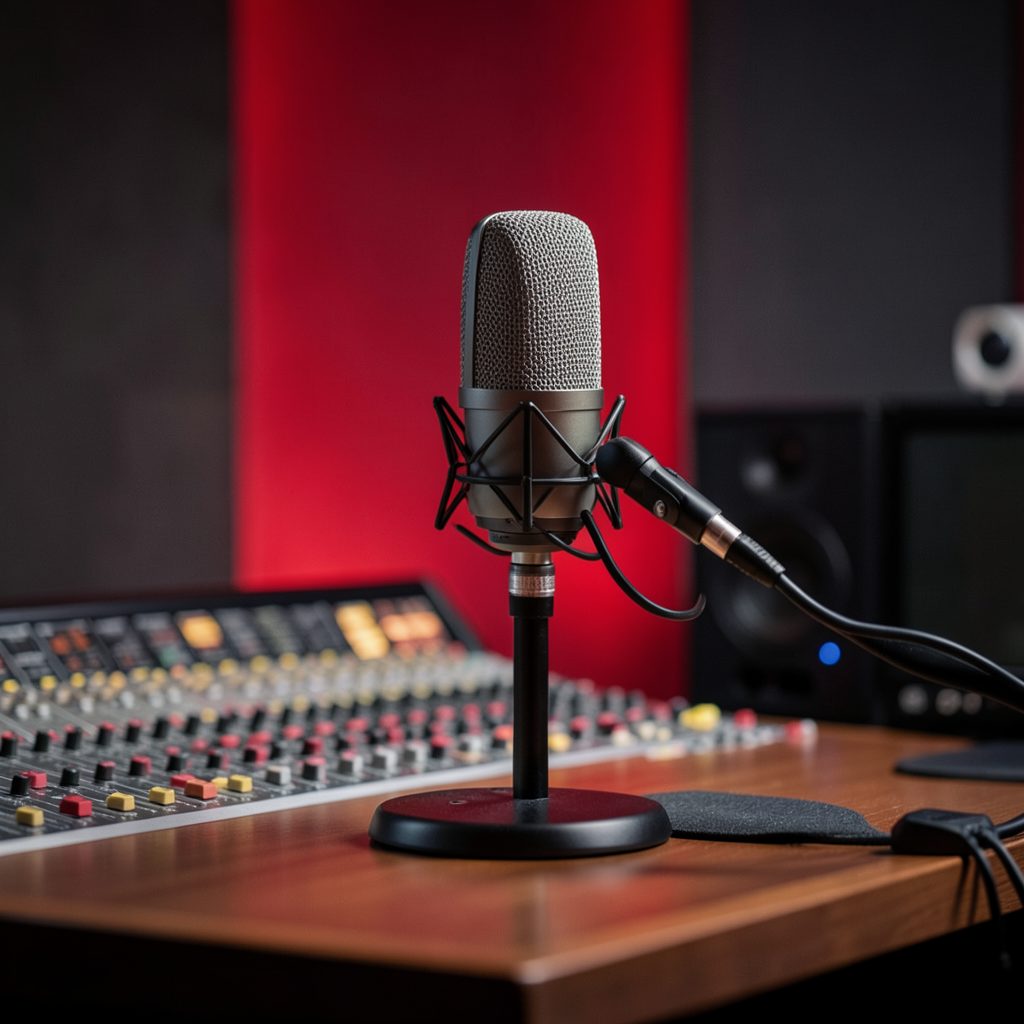
Stock headshots are the single fastest way to flatten a media kit. The image at the top of your document is doing real work: it tells the reader whether you look at home in your own story. Replace the polished corporate portrait with a frame that puts you inside the work, whether that is a podcast studio, a stage, a page from your book, or a moment captured in your element. Choose the shots that say something a stranger could not learn from your bio.
For creators working across formats, a small image bank beats a single cover photo. Three to five high-resolution shots, captioned and credited, give the recipient options. If you want a useful benchmark for what a well-curated, story-led image set looks like, the kind of editorial photography shown across the wildlife leaderboard demonstrates how framing, light, and subject choice create a recognisable voice across a series. Even if your work is not photographic, the principle holds: each image should answer a different question about who you are. Captions matter too. A caption that names the event, the publication, or the moment gives the image context, and context is what turns a picture into a piece of evidence.
Australian locations offer a natural visual shorthand. A photo at the Sydney Opera House forecourt during Vivid, a candid frame from a regional writers' festival, or a shot inside a Melbourne radio studio all do the work of telling a reader where your work lives. The image should answer the question they would otherwise have to chase down themselves, and it should feel unmistakably yours.
Use numbers as texture, not a trophy cabinet
Numbers belong in a media kit, but they should never crowd the prose. Pick three or four data points that reinforce the narrative you have already opened with, and place them where they land hardest. A 27 percent rise in podcast downloads means little on its own, but "the series doubled its audience within six months of relaunch" carries the same fact with a human frame. Numbers used as texture read as evidence; numbers used as a trophy cabinet read as insecurity, and insecurity is rarely the impression you want to leave on a producer who has read a hundred kits that week.
If your work has appeared on Australian platforms, name them. A line that mentions a guest segment on ABC Radio National, a column in The Australian, or a regular spot on a Melbourne-based business podcast does the work of three separate statistics. Local context lets a recipient place you in their own planning grid without doing translation. For commercial work, mentioning rate cards in AUD, plus a note about GST, also signals that you understand how the local market books talent and pays suppliers, which is the kind of detail that gets you taken seriously on the first round.
The strongest move is to pair figures with moments. A testimonial from a producer, a quote from a fellow author, or a short line from a mentee can land harder than another column of percentages, and they signal trust, which is the hardest currency in this work. If you can, attribute the figures to a credible source. A line such as "downloads per episode, per the publisher's quarterly report" reads as professional and removes any quiet doubt about the figure. Let the numbers whisper while the people speak.
Refine, personalise, and send with confidence
A story-driven kit still needs polish. Read it aloud. Cut any sentence that does not earn its place. If a paragraph could be lifted from any other expert in your field, rewrite it until it could only be you. Then save several versions: a long form for television commissioners, a one-pager for podcast producers, and a tight pitch email for live events. Each version tells the same story at a different length, and each is shaped for the reader who is most likely to act on it.
Personalisation is where most kits fall apart. A recipient in Parramatta or Fremantle can tell within seconds whether a kit has been sent cold or tailored. Open with a line that names their show, their city, their audience, or a recent episode you enjoyed. Two sentences of genuine context will do more for your reply rate than another page of bios. If you want a useful template for how a public-facing broadcaster frames her own narrative across broadcasting, advocacy, and authorship, the official about page is a thoughtful reference for structure and tone.
Treat the kit as a living document. Update it quarterly, refresh the photography each season, and revisit your opening line whenever your work shifts. A kit that tells the same story year after year becomes a press release for a version of you that no longer exists, and the people reading it can tell. If you are thinking about what story you want your work to tell over the next chapter, women on resilience is the kind of piece that can quietly reset the narrative a creator chooses for their own kit.
When a kit is built as a story, the reader stops scanning and starts picturing. They see the segment you could film, the panel you could moderate, the keynote you could deliver. That picture is worth more than any spreadsheet of past appearances, and it is the difference between a document that gets filed and one that gets a reply. It is also the difference between a kit that sits in an inbox for a week and one that is forwarded around a production meeting within an hour.
On Air & In Print
Andrea anchors the ITV lunchtime talk show Loose Women, which she joined in 2007, following 11 years as a core presenter on ITV's breakfast programme GMTV, a role she left on New Year's Eve 2008.
Alongside broadcasting, she has written for Red, Best, Scottish Woman and numerous weekly women's titles since starting as a freelance travel writer in 1993.
See Press & MediaReach & Recognition
A snapshot of the audience and impact behind Andrea's television, publishing and brand work.
This Girl Is On Fire
Andrea is CEO and Co-founder of the female empowerment platform This Girl Is On Fire, built around a mission to help women live, learn and thrive in a life they love.
Explore the PlatformScreen & Studio
Promotional and broadcast work created for television and corporate partners, including Barclaycard, Vistaprint and Wii Fit U.
Explore the Site
Find out more about Andrea's career, writing, media coverage and audience reach.
Get In Touch
For media, corporate or general enquiries, use the form below or reach out directly.
Contact details published on this site have appeared as +44 (0)20 7371 5444 / angharad.marsh@officialandreamclean.com and, on an earlier page, 020 7482 3282 / admin@officialandreamclean.com — please treat both as points of contact.